Sourcing ensures that the organisation has access to the right capabilities, services and partners to support business objectives. The aim is to achieve high business and user satisfaction while maintaining a competitive total cost of ownership.
In practice, sourcing operates in a complex environment. It must support both long-term initiatives and fast-paced development, while ensuring compliance with policies and maintaining a strong negotiating position with suppliers. This requires balancing flexibility, control and collaboration.
Sourcing and purchasing therefore need to evolve from purely transactional activities into capabilities that actively support value creation. This includes defining a clear sourcing strategy, enabling efficient purchasing processes, and managing vendor relationships and contracts across their lifecycle.
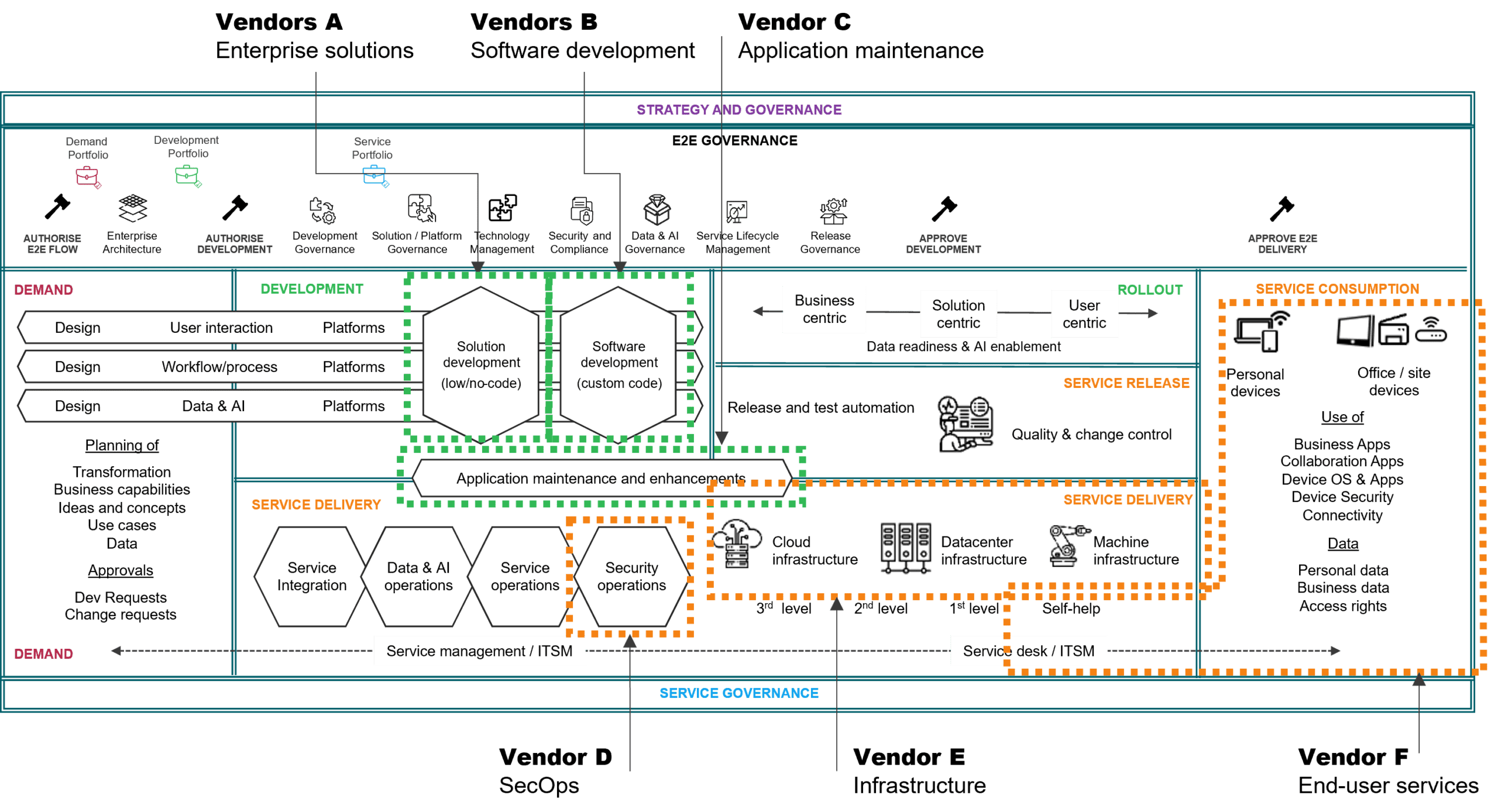
The sourcing strategy defines how services and vendor relationships are structured. It identifies service categories, preferred vendors and the overall approach to sourcing, while supporting ecosystem development and reducing dependency risks.
The strategy aims to:
When defining the sourcing strategy, two perspectives are essential.
First, business drivers clarify what the organisation aims to achieve, such as cost efficiency, speed to market, innovation or exclusivity. These priorities guide sourcing decisions. Second, market dynamics define what is possible. This includes understanding available suppliers, their incentives to engage, regulatory considerations, and the evolution of ecosystems.
In addition, sourcing strategy increasingly needs to consider data and AI ecosystems. When selecting platforms and partners, organisations must evaluate not only functionality and cost, but also how data is used, how models evolve, and how dependencies on external platforms affect long-term control. These considerations influence both vendor selection and the ability to build and sustain competitive capabilities.
Together, these perspectives ensure that sourcing decisions are aligned with both business needs and market realities.
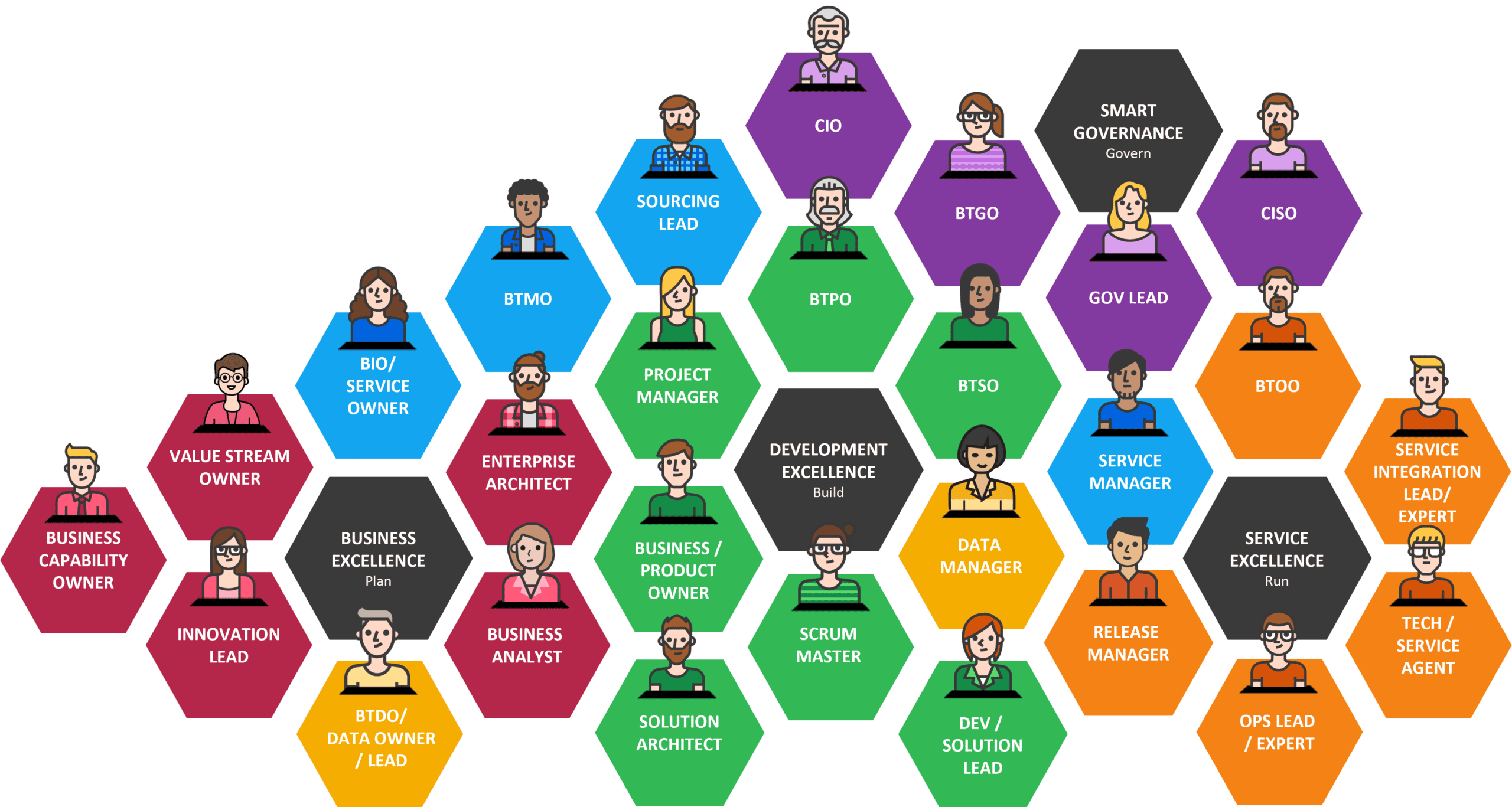
The Sourcing Lead coordinates sourcing governance, supplier selection practices, commercial structures, and alignment between business, legal, finance, service management and supplier stakeholders. The Service Owner ensures that sourcing choices support service objectives, lifecycle needs and long-term business value.
Sourcing processes must support different types of needs, from large initiatives to fast incremental changes.
Traditional sourcing follows a structured request-for-proposal process. It starts from a defined business need and evaluates alternatives between extending existing supplier relationships or initiating a broader market process. This approach provides strong commercial outcomes and transparency, but it can be time-consuming. It is therefore best suited for larger initiatives where requirements can be clearly defined and evaluated.
Single sourcing can be used as an alternative when a specific supplier is expected to provide higher business value. In such cases, clear objectives must be defined, and the opportunity should be reopened if these are not met. Even in single sourcing, transparency and documentation remain essential.
In fast-moving environments, traditional sourcing approaches are not always suitable. Development often starts with ideas that cannot be fully defined in advance and require close collaboration with selected partners. Incremental sourcing supports this by enabling rapid experimentation and learning. It typically begins with a limited agreement, followed by a trial phase to validate the concept, and continues with a full agreement once value has been demonstrated.
This approach enables innovation and speed but may result in less favourable commercial terms. It therefore requires careful control to ensure proper documentation, evaluation and governance. AI-enabled services, data-driven capabilities and platform-based solutions often strengthen the need for incremental sourcing, as value, requirements and operating models are refined through experimentation, usage and learning before broader scaling decisions are made.
Purchasing translates sourcing decisions into operational execution. Within existing agreements, it enables fast and efficient acquisition of services through work orders or purchase orders while ensuring that suppliers deliver according to agreed terms, costs and volumes are monitored and controlled, and purchases are authorised and aligned with strategy and budgets.
Modern procurement capabilities are increasingly automated. Automation improves speed, enables better monitoring, and supports data-driven decision-making in areas such as pricing, supplier performance and cost development.
Vendor and contract management ensure that sourcing delivers value over time through structured governance, clear responsibilities and continuous oversight. Vendors are typically categorised based on their importance and impact, for example as primary, complementary or utility providers. This classification helps define the appropriate level of collaboration and governance.
Effective vendor management focuses on maintaining strong relationships with key partners, aligning development roadmaps and future opportunities, monitoring performance and service quality, and ensuring contracts remain relevant and up to date. Contract management includes maintaining a repository of agreements, tracking key terms, and managing renewals and changes. Clear summaries and visibility of contract conditions support better decision-making. Contracts should also support service evolution, provider transition, operational continuity and future ecosystem changes throughout the lifecycle of the service.
Responsibility for vendor relationships is defined through roles, depending on the context. For example, Service Managers or Development Leads may own relationships with critical suppliers, while sourcing provides overall coordination and governance.