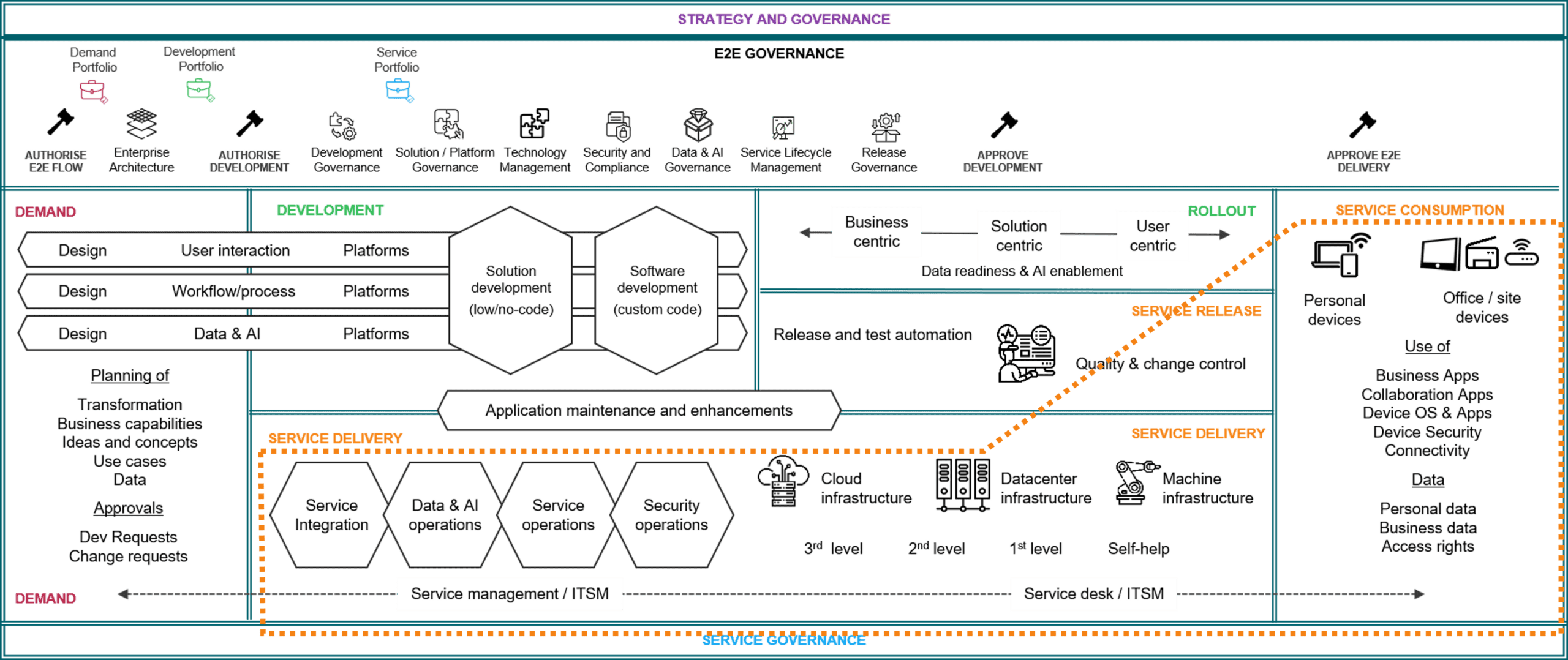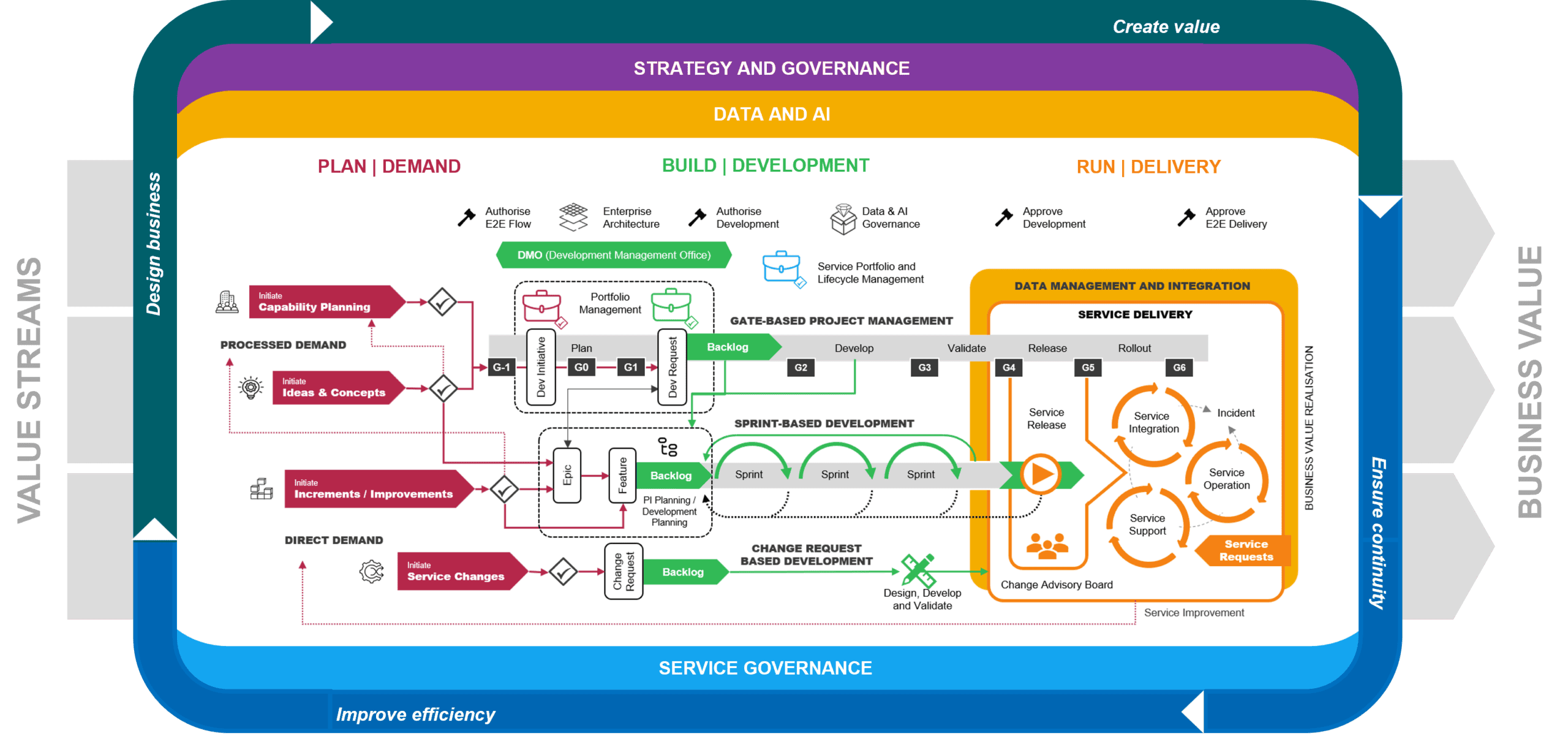
Service operation and automation ensure that services remain available, reliable, protected, and operationally effective during daily use. The objective is to maintain stable and continuously improving operations across increasingly integrated, automated, and globally distributed service environments.
Modern services operate continuously across internal teams, cloud platforms, external providers, operational technologies, automation layers, and AI agents. Service operations therefore focus not only on resolving operational issues, but on maintaining operational continuity, resilience, recoverability, and coordinated runtime operations across the full ecosystem.
Many business services operate continuously and support critical business processes, customer interaction, operational control, and automated decision-making around the clock. Service operations therefore require continuous monitoring, operational responsiveness, recovery capability, and coordinated operational management.
Service operations maintain runtime reliability by coordinating:
Operational visibility is essential in continuously operating environments. Monitoring, analytics, dashboards, and operational reporting provide visibility into service health, availability, operational risks, and emerging operational issues before they cause wider disruption.
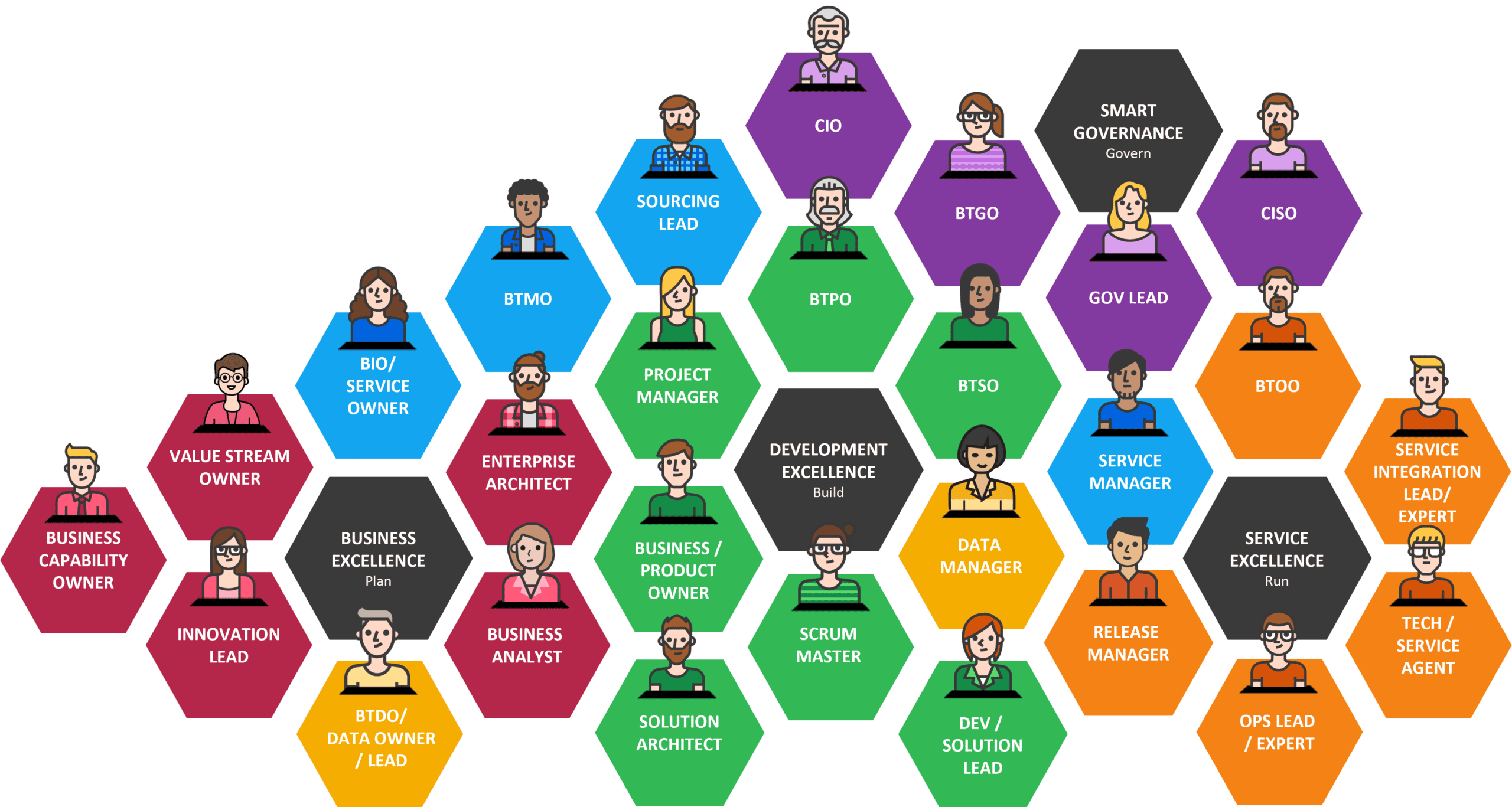
The Service Operations Lead coordinates operational activities across operational teams, providers, support functions, and service integration to ensure that services remain operationally stable and recoverable during daily use.
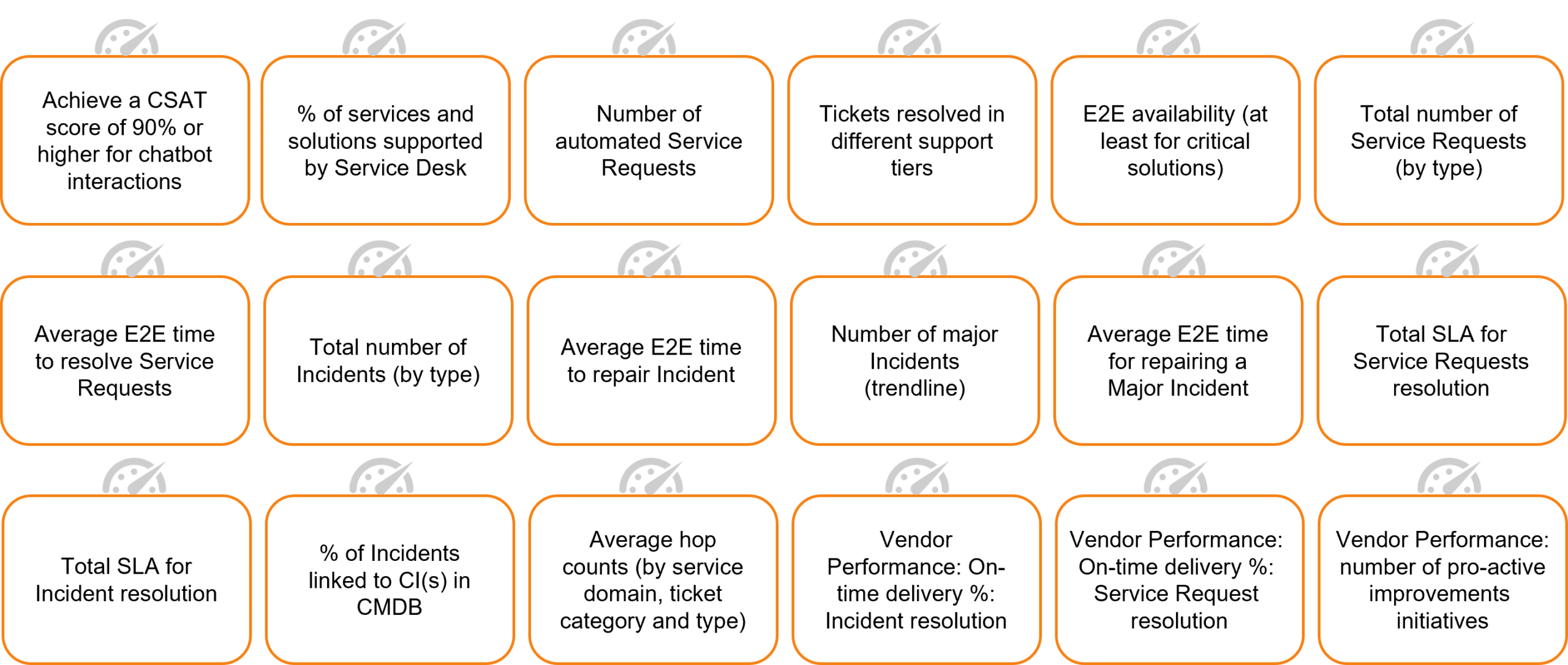
Modern operational environments depend heavily on interconnected services, cloud platforms, external providers, integrations, and automated operational processes. Operational failures increasingly emerge across dependencies rather than within isolated systems.
Service operations therefore focus strongly on operational resilience, vulnerability protection, preventive maintenance, and recovery preparedness.
Operational resilience includes:
Preventive operational management reduces operational disruption by identifying vulnerabilities, capacity issues, unstable dependencies, and operational weaknesses before they develop into larger service failures.
Operational protection also requires close coordination across global providers, local operational organisations, cloud platforms, support teams, and service integration functions. Recovery capability must extend across the full ecosystem rather than individual systems alone.
Service operations are increasingly highly automated. Automated operational processes support monitoring, event handling, recovery activities, deployment coordination, scaling, operational analytics, and routine operational decision-making.
Automation is necessary because operational complexity increasingly exceeds the capacity of manual operational coordination. As service environments become more distributed, dynamic, and data-driven, operations rely on automation to maintain responsiveness, consistency, and operational scalability.
Artificial intelligence further strengthens operational automation and predictive operational management. AI analyses operational events, identifies anomalies, detects dependency risks, supports diagnostics, predicts operational issues, and coordinates predefined operational actions.
AI agents are the new digital workforce within operational environments. They participate in operational processes, interact with services and users, and execute operational tasks alongside human teams and automation platforms. This requires operational monitoring, supervision, escalation models, access control, and operational accountability for AI-enabled operational activities.
Service operations therefore evolve towards hybrid operational environments where human operators, providers, automation platforms, and AI agents work together as one coordinated operational capability.
Modern service operations are rarely managed entirely within one organisation. Operational responsibilities are shared across business owners, global service providers, cloud operators, local service organisations, support teams, and ecosystem partners.
Service operations therefore require clear operational accountability, coordinated escalation models, shared operational visibility, and well-defined operational responsibilities across organisational boundaries.
Global providers often deliver core operational capabilities and 24/7 operational coverage, while local operational organisations coordinate local business support, regulatory requirements, operational communication, and business continuity activities. Service integration coordinates these operational layers into one coherent operational model.
Operational governance becomes increasingly important as operational ecosystems grow more distributed and automated. Services must remain observable, controllable, recoverable, and operationally transparent regardless of how many providers, platforms, automation layers, or AI agents participate in service delivery.
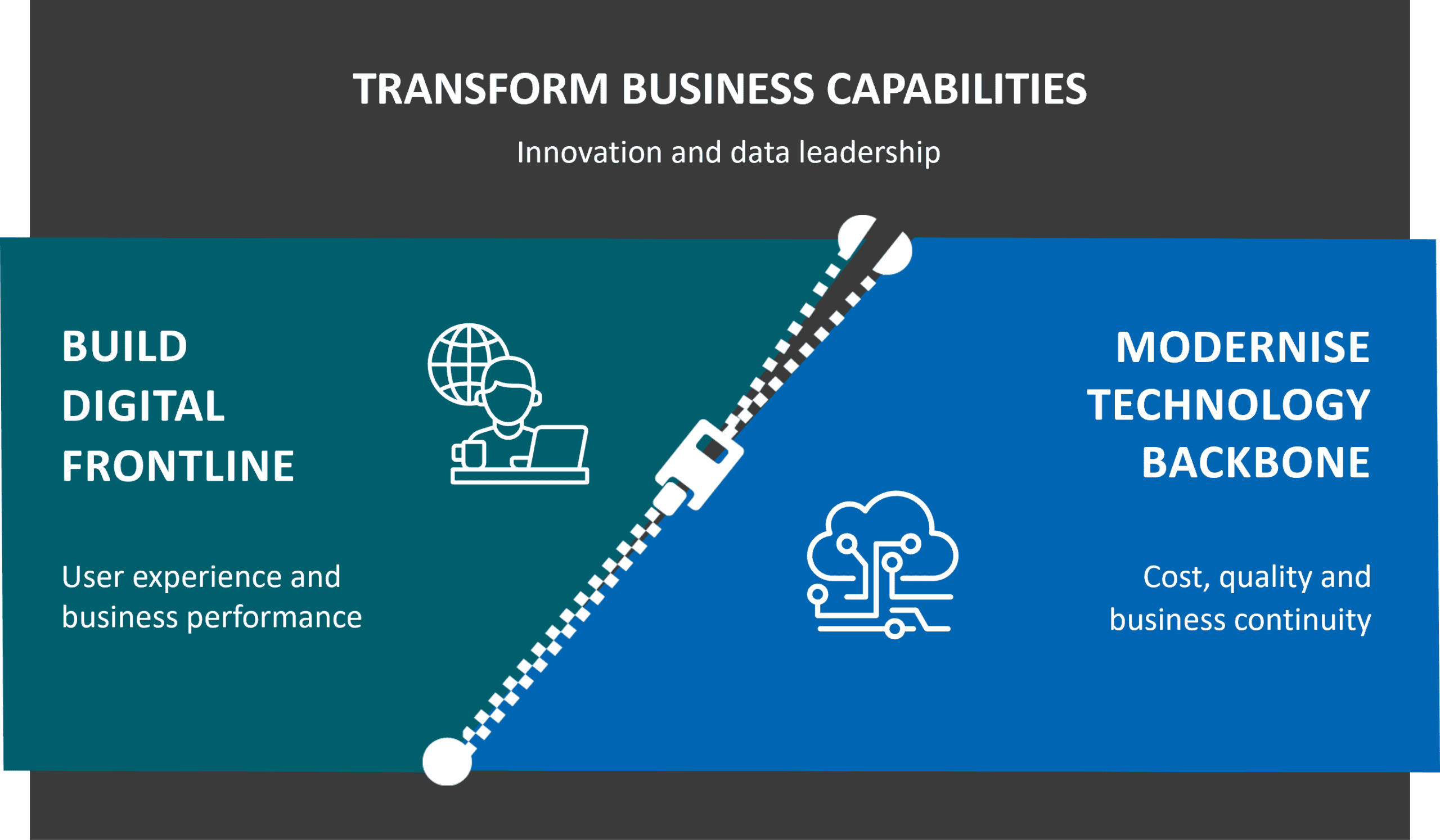
Effective service operations create the operational stability required for modern business environments. By combining continuous operations, operational resilience, automation, AI-assisted operations, and coordinated ecosystem management, organisations can maintain reliable and scalable services in rapidly changing operational environments.