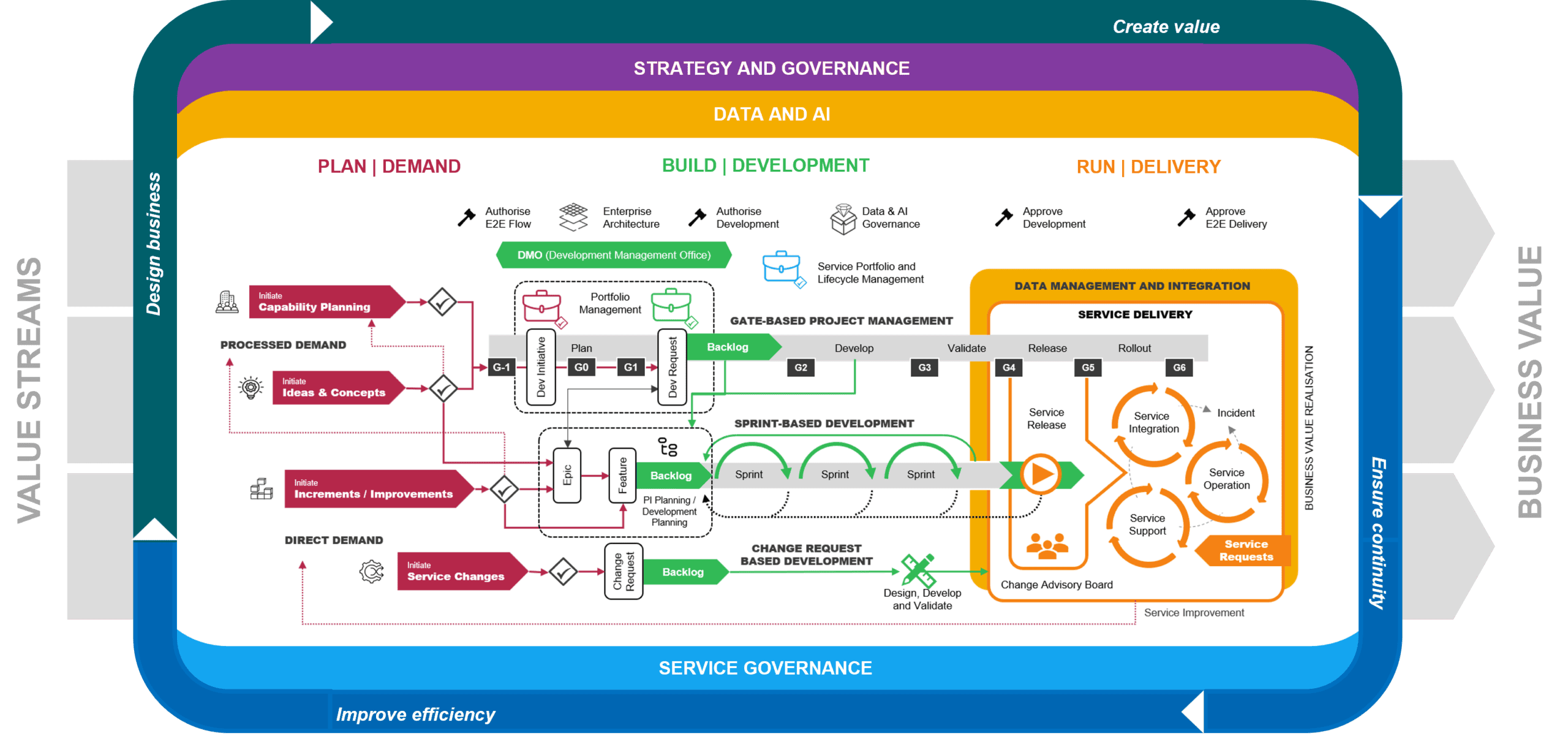
Service release and operational readiness ensure that new or changed services can be introduced into operational use in a controlled and reliable way. The objective is to enable fast and agile releases while maintaining operational quality, continuity, recoverability, and service stability.
A releasable solution becomes an operational service through the release process. This transition requires coordination across development, service integration, operational teams, support functions, providers, and business stakeholders to ensure that the service can operate reliably after release.
Development prepares for the business introduction of the solution, while rollout manages its introduction and adoption across the organisation.
Service release introduces new or updated functionality into the live operational environment. Depending on the nature of the service and the development approach, releases may range from coordinated large-scale transitions to continuous automated releases.
In gate-based development, releases are typically more structured and coordinated. Larger releases often involve planned transition activities, operational preparation, dependency coordination, and controlled go-live procedures.
In sprint-based development, releases are more continuous and incremental. Automated testing, deployment, and validation practices support frequent delivery cycles and enable faster operational feedback and adaptation.
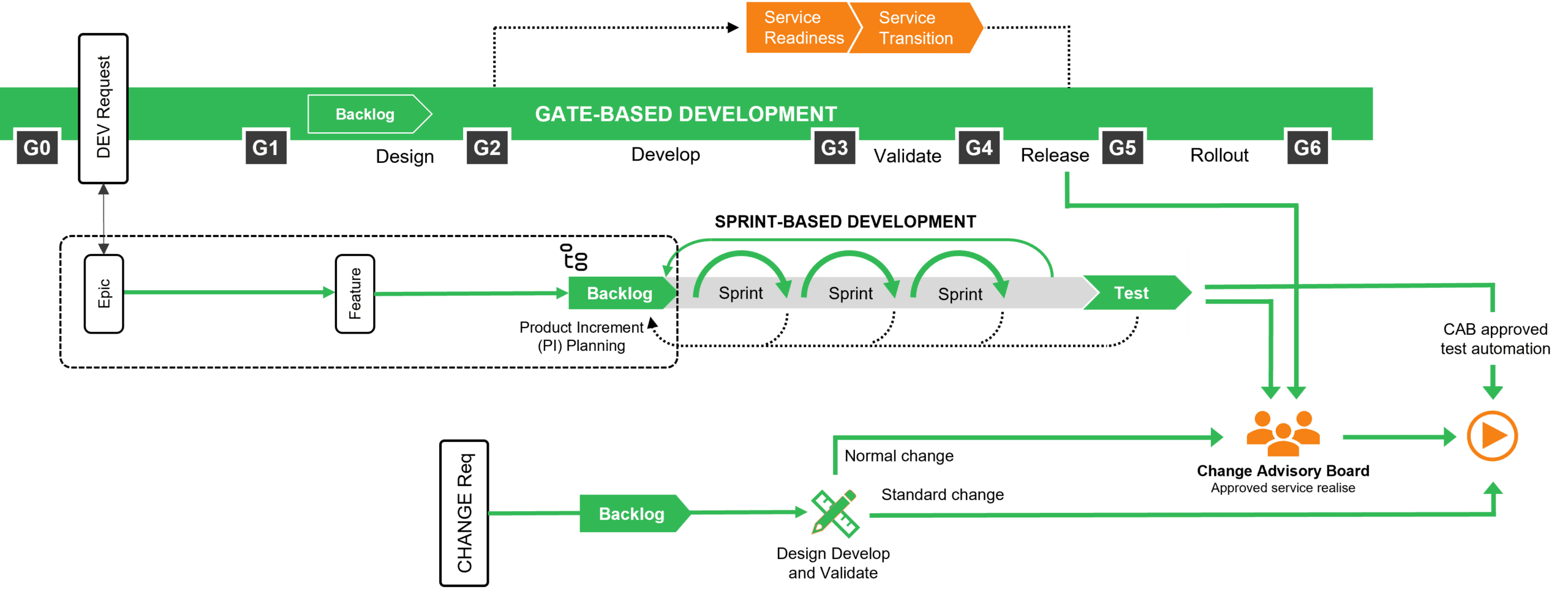
Regardless of the development approach, operational readiness must be verified before services are introduced into production use. Standard changes and pre-approved automated releases may proceed through simplified operational approval flows, while broader operational transitions require wider coordination and readiness validation.
As service ecosystems become more integrated, release success increasingly depends on operational dependencies, provider coordination, data readiness, integrations, and recovery preparedness rather than deployment activities alone.
Operational readiness ensures that services can operate reliably, securely, and recoverably once released into production.
Operational readiness includes verifying that:
Operational readiness also ensures that operational ownership, service responsibilities, and support structures are clear before the service enters production use.
A technically deployable solution is not necessarily operationally ready. Services become operationally ready only when they can be monitored, supported, recovered, and managed reliably within the operational environment.
Operational readiness is coordinated through service integration and operational collaboration across development, operations, providers, continuity management, and support functions.
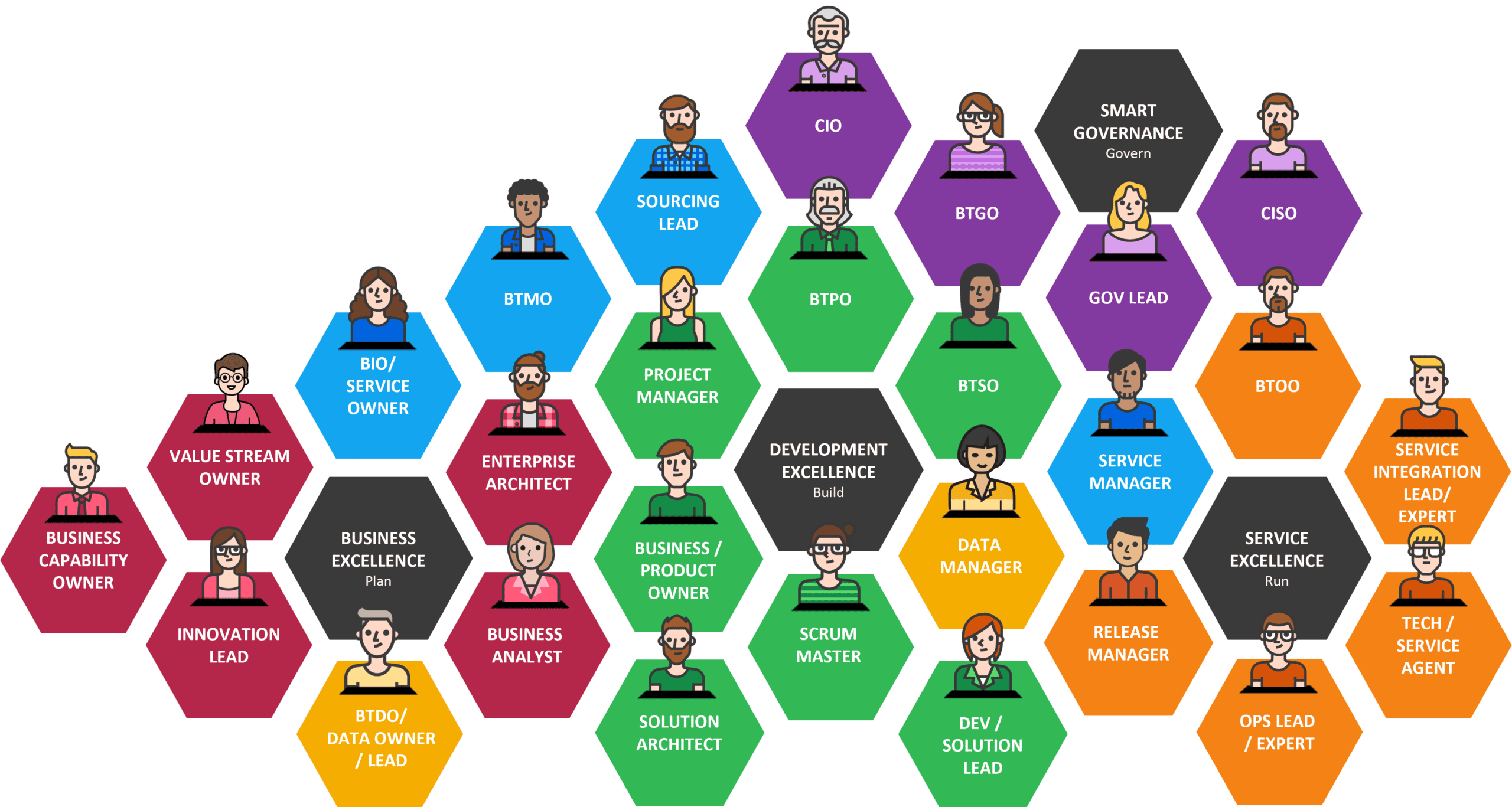
The Release Manager coordinates release planning, operational readiness validation, deployment scheduling, rollback preparedness, operational transition activities, and release communication across the operational ecosystem.
Release coordination ensures that operational transitions can be executed without causing unnecessary disruption to services or business operations.
Release coordination typically includes:
The release governance control together with service integration and operational teams, supports release governance and operational coordination by reviewing operational risks, dependencies, continuity considerations, and readiness status before release.
In sprint-based development, technical releases may occur continuously for testing and feedback purposes. Broader operational rollout and production activation still require operational validation and readiness coordination before services are exposed to wider operational use.
Following release, organisations often establish a hypercare period with increased operational support, monitoring, analytics, and coordination to stabilise the service and resolve operational issues quickly during the early operational phase.
Artificial intelligence significantly changes release management and operational readiness.
AI-enabled services operate through models, agents, automation, data flows, and dynamic operational behaviour. Operational readiness must therefore validate not only technical deployment, but also operational behaviour, data quality, monitoring coverage, escalation paths, recovery capability, and operational transparency.
AI-enabled services also require fallback and rollback mechanisms so that incorrect, unsafe, or unreliable outcomes can be managed without disrupting business operations. Clear operational ownership is essential, as AI agents and automated capabilities become part of the service environment.
At the same time, release and readiness activities themselves can become increasingly automated and agent-supported. AI-assisted operational practices support readiness verification, deployment coordination, monitoring, anomaly detection, and recovery management.
As release cycles become faster and operational environments more dynamic, coordinated readiness validation, continuity management, and operational governance become increasingly important to maintain stable and recoverable service operations.