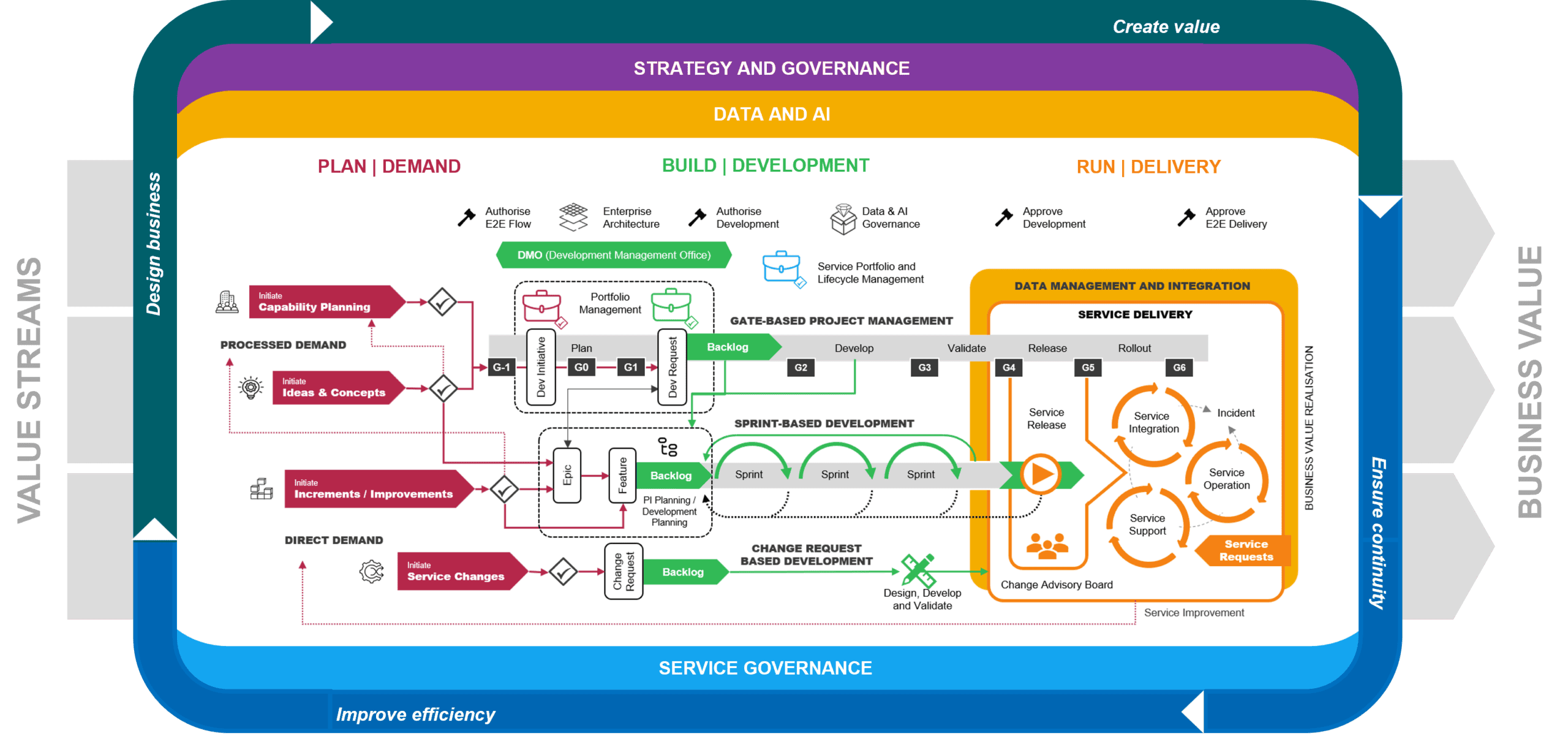
Service portfolio provides visibility and governance over current, planned and retiring services. It connects demand to service-level decisions by showing how new, changed or retired services affect the overall service landscape, investment priorities and operational commitments.
Where service planning focuses on the individual service, service portfolio provides the management view across services. It ensures that services are not developed, continued or retired in isolation, but as part of a coherent service landscape that supports business priorities, cost efficiency and operational resilience.
Service portfolio is especially important when demand creates new services, expands existing services or changes the role of services in business operations. It makes the impact of demand visible across lifecycle stage, business criticality, cost, sourcing, dependencies and service performance. This allows leaders to decide whether a service should be introduced, scaled, consolidated, modernised or retired.
The service portfolio gives the organisation a structured view of services and their status. It includes services in the pipeline, services in production, services being changed and services planned for retirement.
This portfolio view helps the organisation understand whether the service landscape remains relevant, economically justified and operationally sustainable. It also makes duplication, overlap, ageing services, underused services and concentration risks visible.
The service portfolio supports decisions on service investment and lifecycle direction. It provides the basis for comparing services, prioritising changes and understanding how service-related demand affects the wider operating environment. Without this view, individual service decisions may appear reasonable while the overall service landscape becomes too complex, costly or difficult to operate.
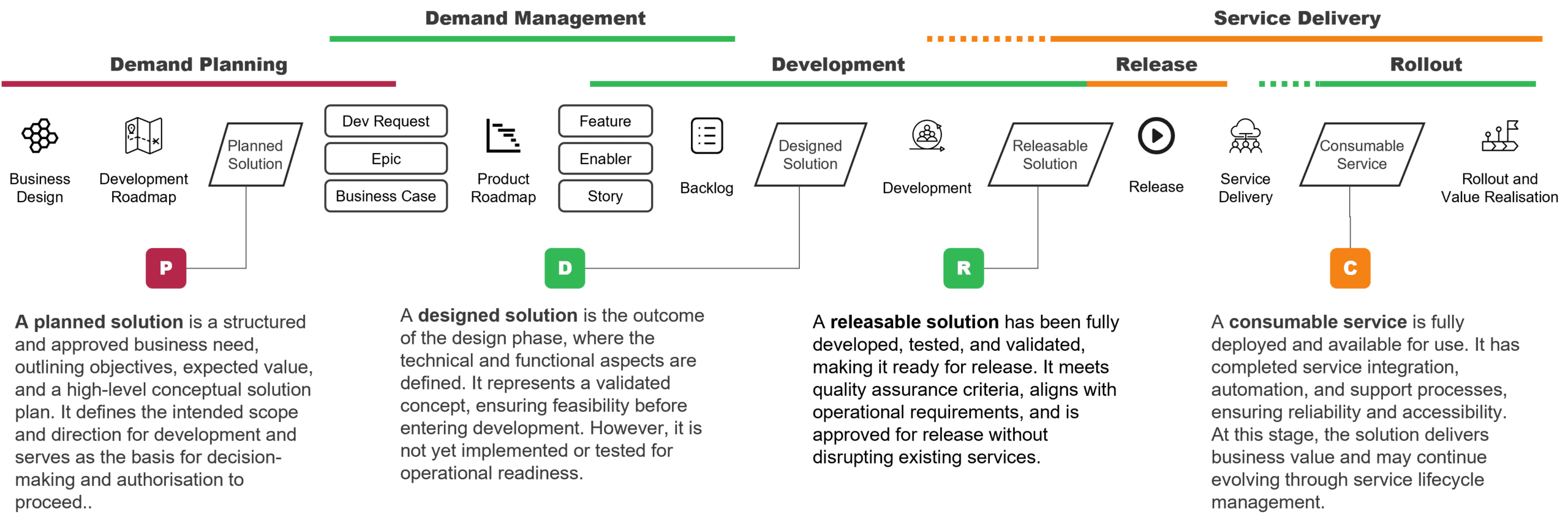
Service-related demand often changes more than a single service. A new capability may require a new service, an existing service may need to be extended, or several services may need to be consolidated to reduce complexity and cost. The service portfolio ensures that these decisions are assessed from a lifecycle and landscape perspective.
New services should enter the portfolio based on validated demand, clear ownership and an understood delivery model. Existing services should be adjusted when business needs, usage patterns, performance expectations or sourcing conditions change. Services should be retired when they no longer deliver sufficient value, when a better alternative exists, or when continued operation creates unnecessary cost or risk.
The service portfolio therefore connects business demand with lifecycle decisions. It ensures that development initiatives and service changes are evaluated not only against local needs, but also against their impact on the full-service landscape.
AI can become an important part of a service and may introduce new dependencies on AI platforms, models, data, integrations and agents. These dependencies can change faster than the service itself and therefore need to remain visible in service planning and portfolio decisions.
The service portfolio should show where AI is material to a service and where it affects cost, risk, continuity, performance or lifecycle direction. The purpose is not to duplicate detailed AI governance, but to ensure that ervice Owners and those responsible for service portfolio decisions understand the dependencies that affect the services they manage and invest in.
Individual AI agents do not normally become separate service portfolio items. Shared AI platforms may be managed as services where they provide a significant common capability; otherwise, they are treated as dependencies of the services that use them.
Executable AI capabilities that operate beyond direct and close human control are maintained in the AI repository. The service portfolio references relevant information from the AI repository where AI dependencies affect service value, cost, risk, continuity or lifecycle decisions.
Service Portfolio governance ensures that service lifecycle decisions are made deliberately and with sufficient visibility. It supports decisions on service introduction, continuation, consolidation, modernisation and retirement.
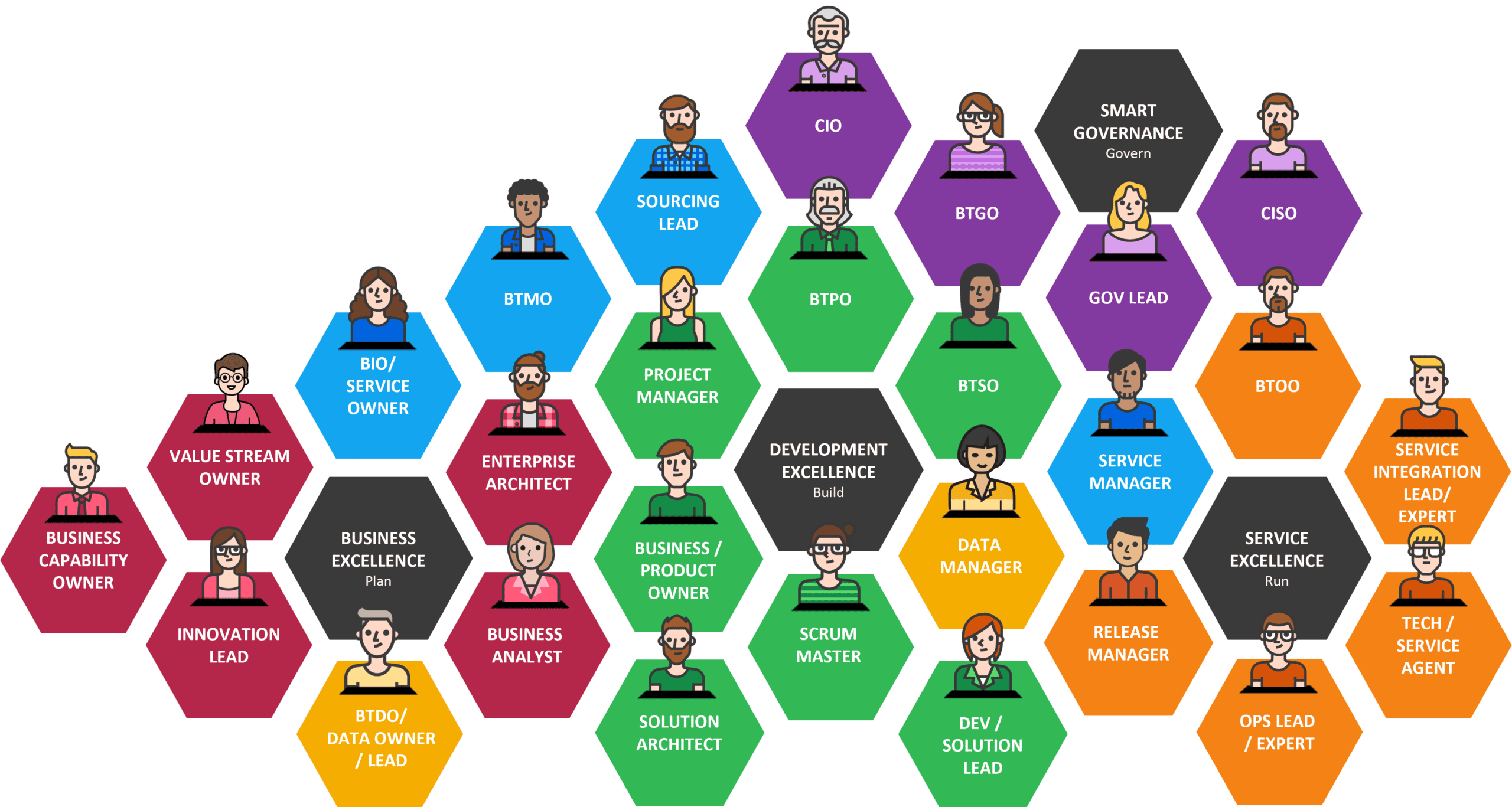
The Service Owner is accountable for the business fit, lifecycle direction and value of an individual service. The Business Technology Management Officer supports the overall service portfolio view and ensures that service lifecycle decisions are visible, comparable and aligned with business priorities, financial constraints and operational commitments.
Service portfolio governance also provides input to development and service planning. When demand affects existing services or creates new ones, the service portfolio helps assess whether the service landscape can absorb the change, whether dependencies are understood and whether the investment remains justified.
For AI-enabled services, this includes understanding material dependencies on AI platforms and executable AI capabilities. Detailed agent-level governance remains in the AI repository, while the service portfolio uses the relevant information when assessing service value, risk, continuity and lifecycle direction.
By linking demand, service planning and lifecycle decisions into one management view, service portfolio protects operational capacity, improves cost transparency and supports consistent service evolution. It ensures that the service landscape remains aligned with business priorities rather than growing through disconnected decisions.