Financial planning and control ensure that business technology is managed in a transparent and controlled way. It provides the structure for justifying operational performance, assessing investment feasibility, and allocating costs across the organisation.
Effective financial management depends on clear structures and processes. Decisions related to investments, services, and operations require transparency in how costs are generated, allocated, and linked to business activities.
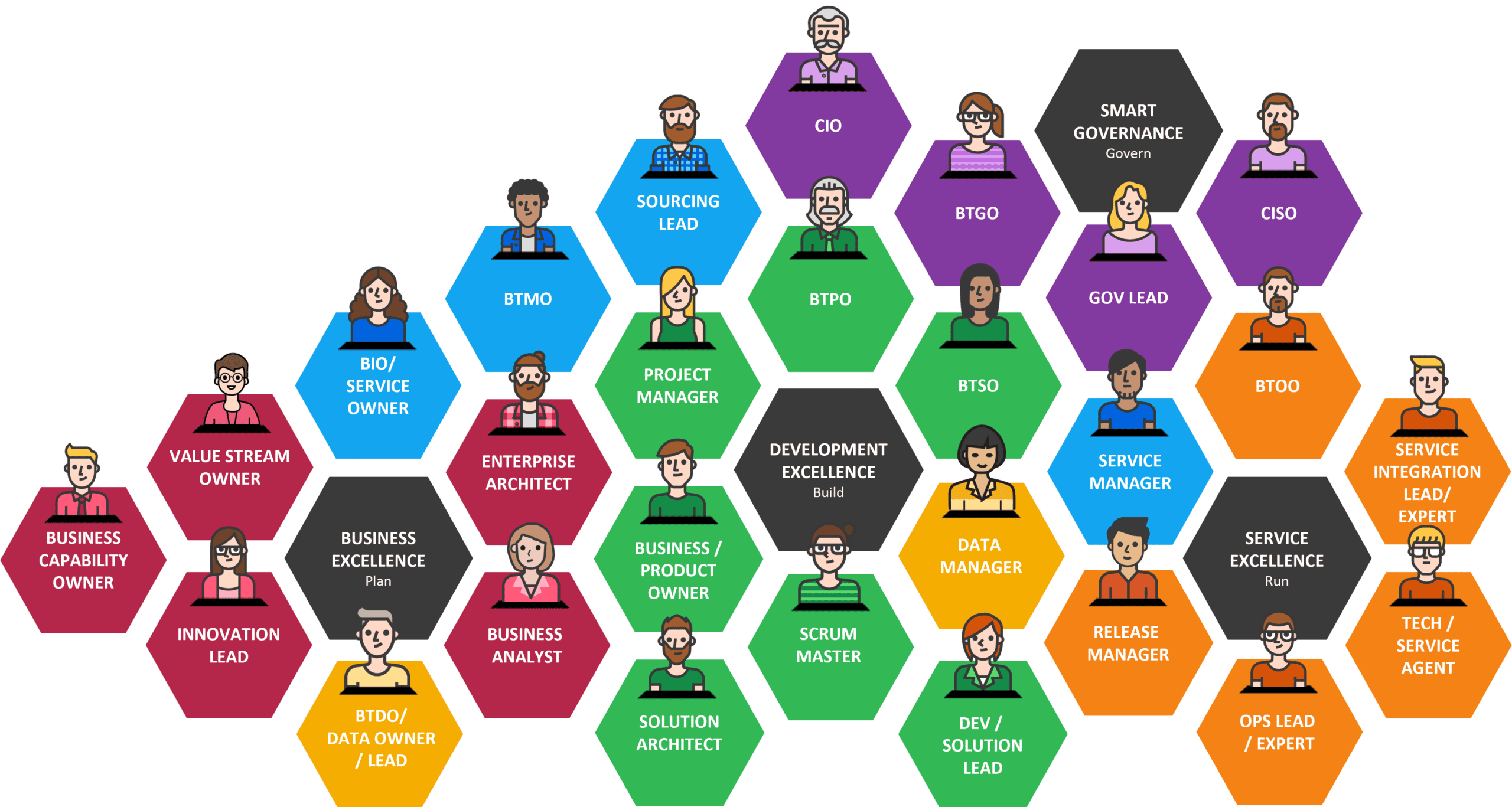
Financial management is not only a finance function. It requires active collaboration across business, service management, sourcing, and financial roles to ensure that financial decisions reflect both operational realities and business priorities.
Financial transparency connects costs to services, capabilities, and business units. It shows how costs are generated, allocated, and ultimately transferred to business consumption, often through service fees. It also enables comparison between actual spend and planned budgets.
Financial planning ensures that funding is aligned with business priorities by reserving budgets, monitoring actuals, and allocating costs consistently. Service Managers support this by maintaining visibility into service costs, consumption, forecasts and daily financial follow-up.
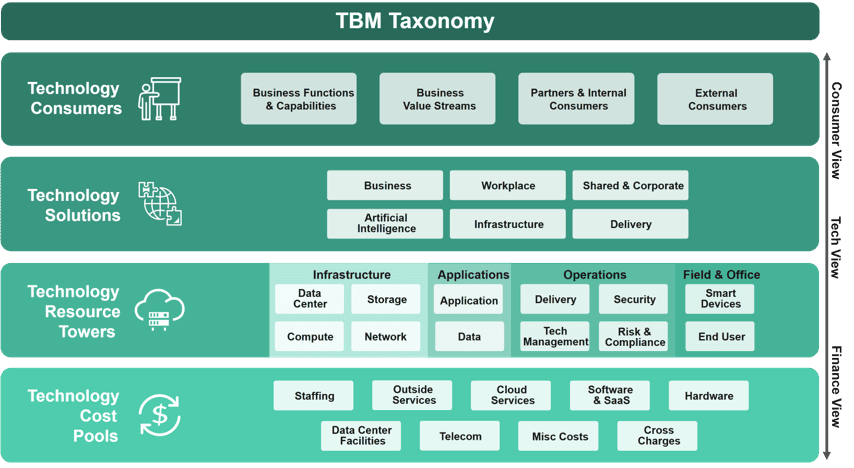
Achieving transparency is challenging, as costs are recorded at accounting level while decisions are made at service or capability level. A standardised structure is therefore required. The Technology Business Management (TBM) taxonomy provides this foundation by linking cost sources, technologies, services, and capabilities, enabling consistent communication and fact-based decisions.
Budgeting defines how financial responsibility is structured across business and technology. It clarifies who funds which activities and ensures that both value creation and delivery are properly financed.
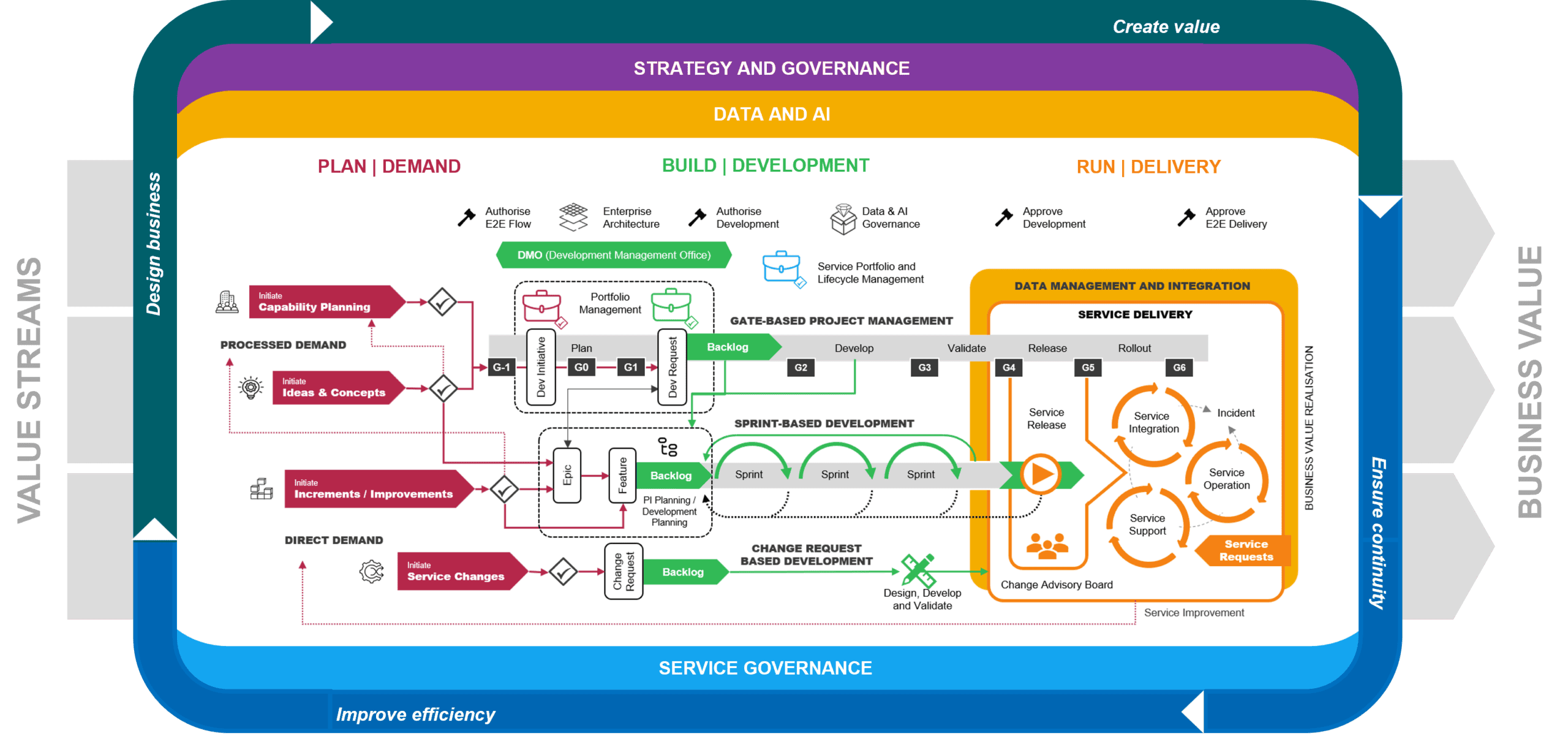
Business funding focuses on defining and realising value, such as planning, business design, rollout, and change management. Technology funding focuses on building and operating capabilities, including development, platforms, and service operations.
This structure reflects the lifecycle of business technology. Early phases are driven by business investment, while development and operations are primarily funded through technology budgets.
Budgeting establishes the financial foundation. At the same time, allocation of funding drives demand by determining what is prioritised and developed, while cost allocation reflects the supply side of delivering services.
Financial feasibility ensures that investments and services are economically justified throughout their lifecycle.
Before development, feasibility is assessed through business cases, typically using payback or net present value calculations. During development, it supports go/no-go decisions and identifies initiatives that should be adjusted or stopped. After implementation, it compares realised costs and benefits with the original case to capture lessons learned.
This staged approach ensures continuous validation of financial decisions. It also applies to ongoing services, which must be regularly evaluated to ensure that they continue to deliver sufficient value relative to their cost.
Financial steering supports the organisation in directing available resources to where they create the most value. While budgeting defines the structure of funding, enterprise governance decides how financial resources are allocated and reallocated. Financial planning and control support these decisions by consolidating financial information, implementing agreed allocations and monitoring their use.
Resources are allocated across value streams based on business priorities and expected impact with adjustments made as conditions change. Benchmarking against market standards provides insight into cost competitiveness and supports decisions on where to invest or improve efficiency.
Financial steering also manages key financial balances. The build versus run ratio determines how much is invested in new capabilities compared to operating existing services, while the balance between capital expenditure (CapEx) and operational expenditure (OpEx) affects flexibility and long-term cost structure.
Through these mechanisms, financial steering aligns financial resources with business priorities and value creation.
Cost strategy defines how the overall cost base evolves over time. While financial steering focuses on allocation, cost strategy focuses on the structure of costs.
Organisations make deliberate choices to increase, maintain, or reduce costs depending on strategic priorities. Increasing costs may support growth or new capabilities, maintaining costs may ensure stability, and reducing costs may improve efficiency or release resources for investment.
These decisions are shaped by underlying cost drivers such as technology platforms, sourcing models, level of automation, and use of external partners. Managing these drivers allows organisations to align their cost structure with long-term objectives.
Business technology costs are driven by operational assets, including people, ecosystem partners, technology platforms, and data. Understanding these drivers provides a clearer view of cost development. For example, automation may reduce operational effort, while increased reliance on external partners may shift costs toward services. Similarly, platforms and data introduce new cost dynamics that must be managed.
Linking financial data to these elements improves control over cost evolution and supports more informed decision-making. Cost optimisation should therefore focus on aligning spending with value creation rather than simply reducing expenses.
The Service Owner guides structural and targeted cost changes, such as changes to service scope, sourcing model, platform choices, automation level or lifecycle direction, ensuring that cost optimisation remains aligned with service value and long-term capability needs.