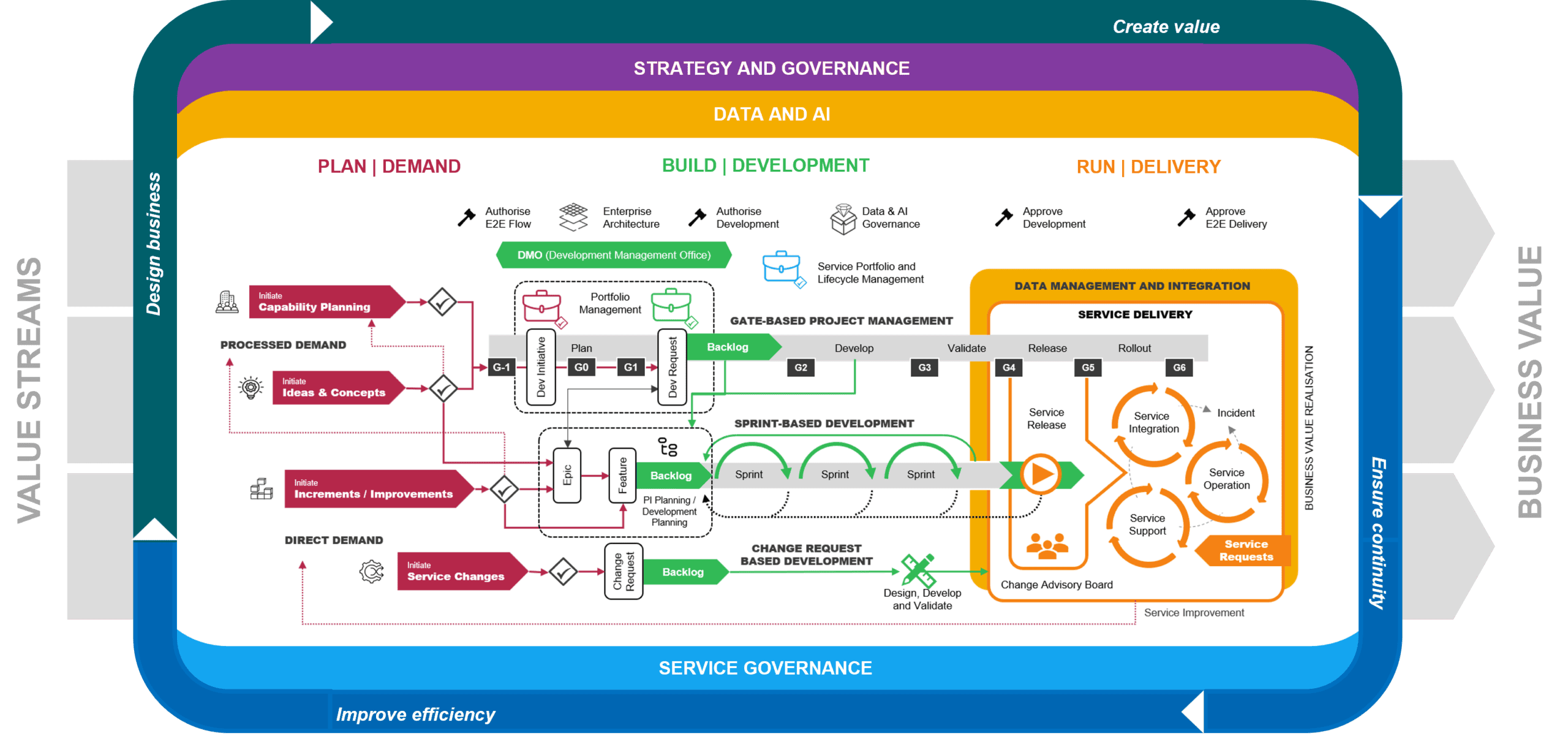
Services operate in changing business and operational environments. User expectations evolve, technologies change, providers and platforms develop, and operational conditions shift over time. Services therefore need to evolve to remain reliable, efficient, secure, and aligned with business needs.
Continual improvement and retirement ensure that services are optimised, adapted, simplified, and eventually retired in a controlled and sustainable way. The objective is to maintain operational quality and business value throughout the service lifecycle while avoiding unnecessary complexity and obsolete service dependencies.
Improvement is part of normal service operations, service management, and operational decision-making.
Continual improvement relies on understanding how services perform in daily use.
Operational metrics, service analytics, support interactions, user feedback, incidents, usage patterns, and ecosystem dependencies provide insight into service quality, adoption, recurring issues, and improvement opportunities. This helps organisations evaluate whether services continue to meet business expectations, operational requirements, cost targets, and user needs.
Service operations produce one of the richest sources of insight for future development. They show how services are actually used, where users struggle, which capabilities remain underused, and where operational friction reduces business value.
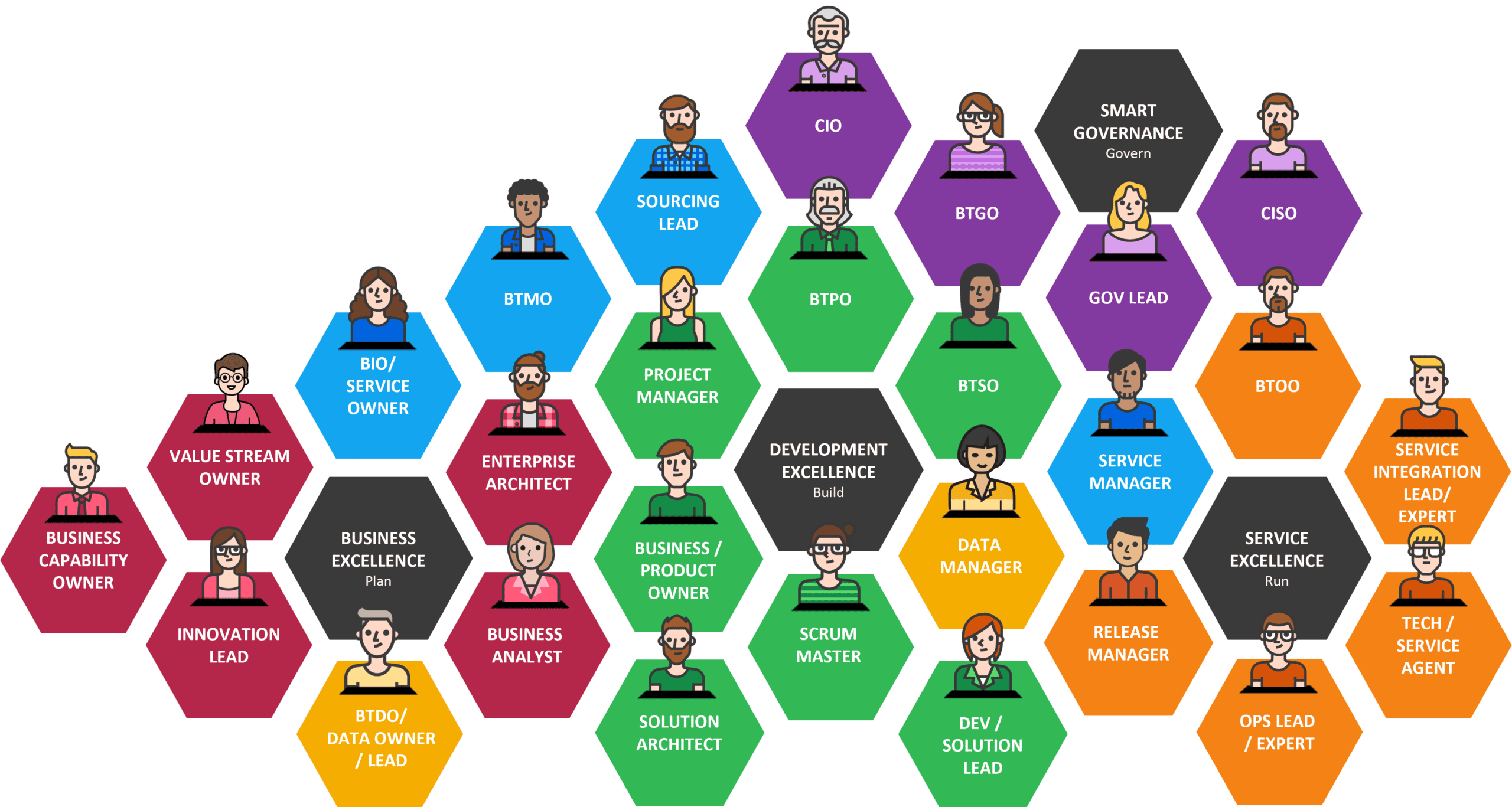
The Ops Lead, Service Manager, and Service Integration Lead coordinate operational follow-up, service performance reviews, improvement prioritisation, and operational lifecycle input together with operational teams, providers, support functions, and business stakeholders.
Continual learning turns operational experience into improvement actions and future development input.
User feedback, usage patterns, support data, service analytics, and operational observations create feedback loops into service operations, service integration, demand management, and development. These loops help identify practical improvements, new development needs, adoption barriers, knowledge gaps, and opportunities to simplify or strengthen services.
Many improvements are incremental: improving usability, adjusting workflows, strengthening monitoring, simplifying support, improving automation, removing recurring issues, or refining service content. Other findings may lead to larger development initiatives when operational experience shows that the current service no longer meets business needs.
Automation and artificial intelligence strengthen continual learning by analysing usage patterns, identifying recurring bottlenecks, detecting operational risks, recognising underused capabilities, and supporting prioritisation of improvement needs. This enables organisations to learn more from service operations than traditional reporting and reactive issue handling provide.
Continual improvement therefore links daily service experience with future development. It ensures that services evolve based on real usage, operational evidence, and business feedback rather than assumptions made only during planning or development.
Retirement is the final stage of the operational service lifecycle. Services are retired when they no longer provide sufficient business value, become operationally inefficient, are replaced by newer capabilities, or create unnecessary operational complexity, risk, or cost.
Service retirement requires controlled planning and coordination to ensure that dependencies, integrations, providers, continuity arrangements, data retention, and user impacts are properly managed throughout the transition.
In many cases, retirement occurs gradually alongside the introduction of replacement services, platforms, or operating models. Effective retirement planning therefore requires visibility into service relationships, provider arrangements, operational responsibilities, data dependencies, and recovery requirements across the full ecosystem.
Retirement is an important form of operational optimisation. It reduces complexity, removes obsolete dependencies, lowers operational risk, and releases capacity for services that create greater value. Service or product retirement is coordinated by the roles responsible for its lifecycle. Service integration supports the transition where dependencies across services or providers need to be managed.
Artificial intelligence and service analytics support retirement decisions by identifying underused services, overlapping capabilities, operational inefficiencies, unnecessary dependencies, and high-cost areas.
Continual Improvement and Retirement ensure that services evolve in line with changing business and operational conditions while maintaining control throughout the lifecycle. By combining operational insight, service learning, simplification, automation, and controlled retirement practices, organisations improve service quality while maintaining a sustainable service environment.