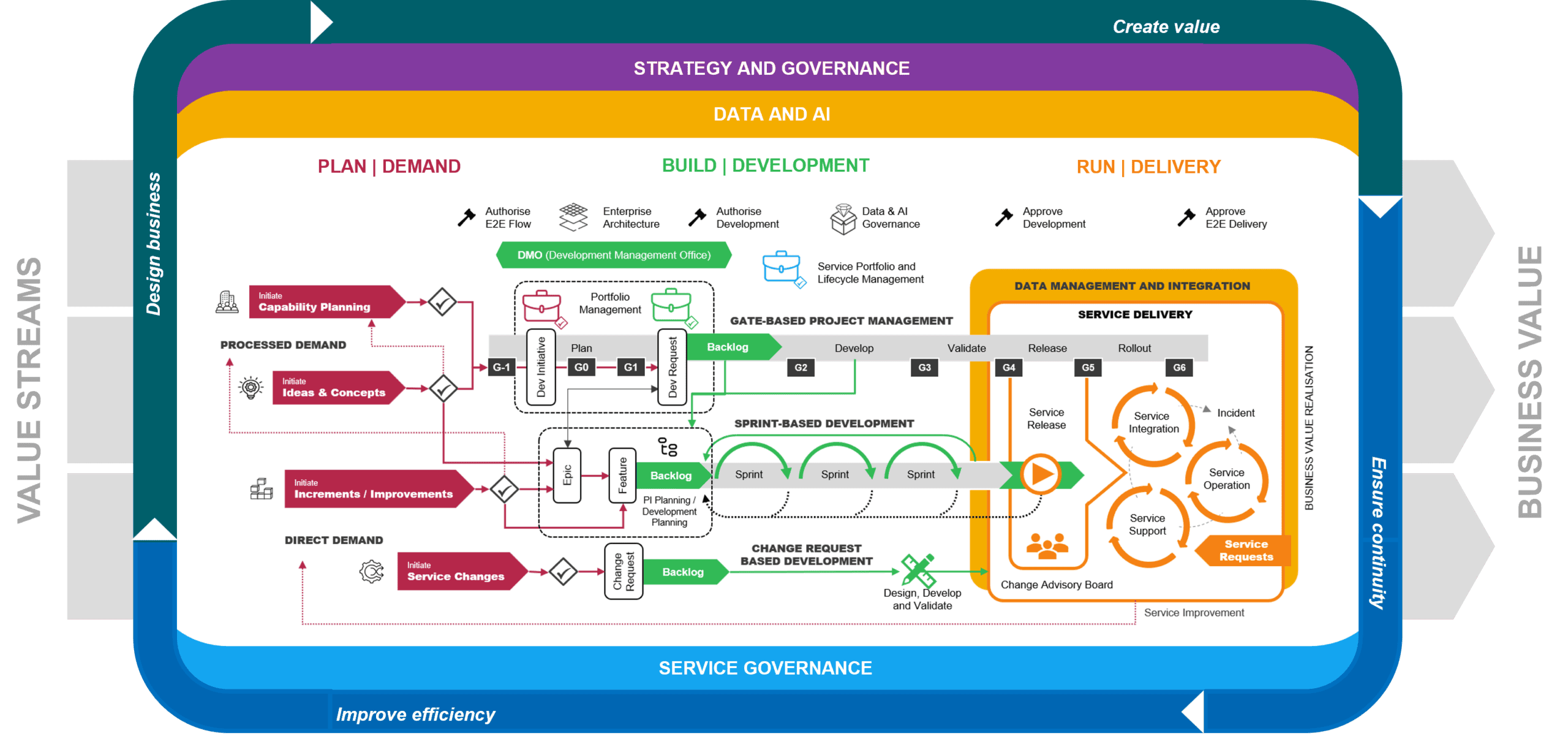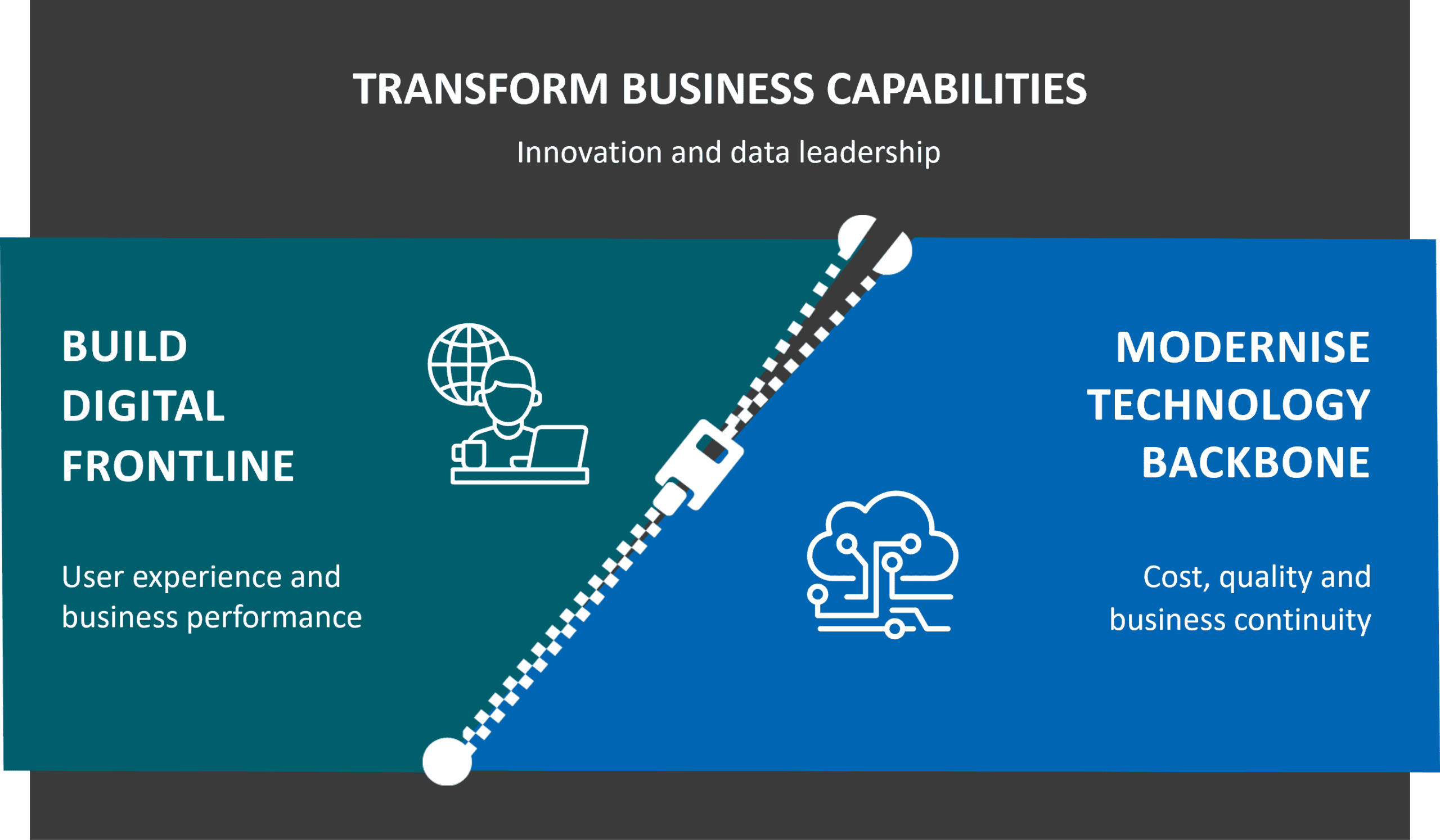
Data creates sustainable value when it is owned, governed, and developed as part of daily business management. Ownership is not only a right to make decisions about data. It is also a responsibility to ensure that data is correct, usable, protected, and applied in ways that support business outcomes.
Data governance provides the structures and routines that connect data-related decisions to business priorities. It ensures that data remains trusted, responsibly used, and fit for purpose throughout its lifecycle, from creation and use to change, retention, and disposal.
As data becomes an operational asset used in analytics, automation and AI-enabled work, unclear ownership becomes a direct business risk. If data can influence decisions, actions and customer experiences, the organisation must know who is accountable for its meaning, quality, use and improvement.
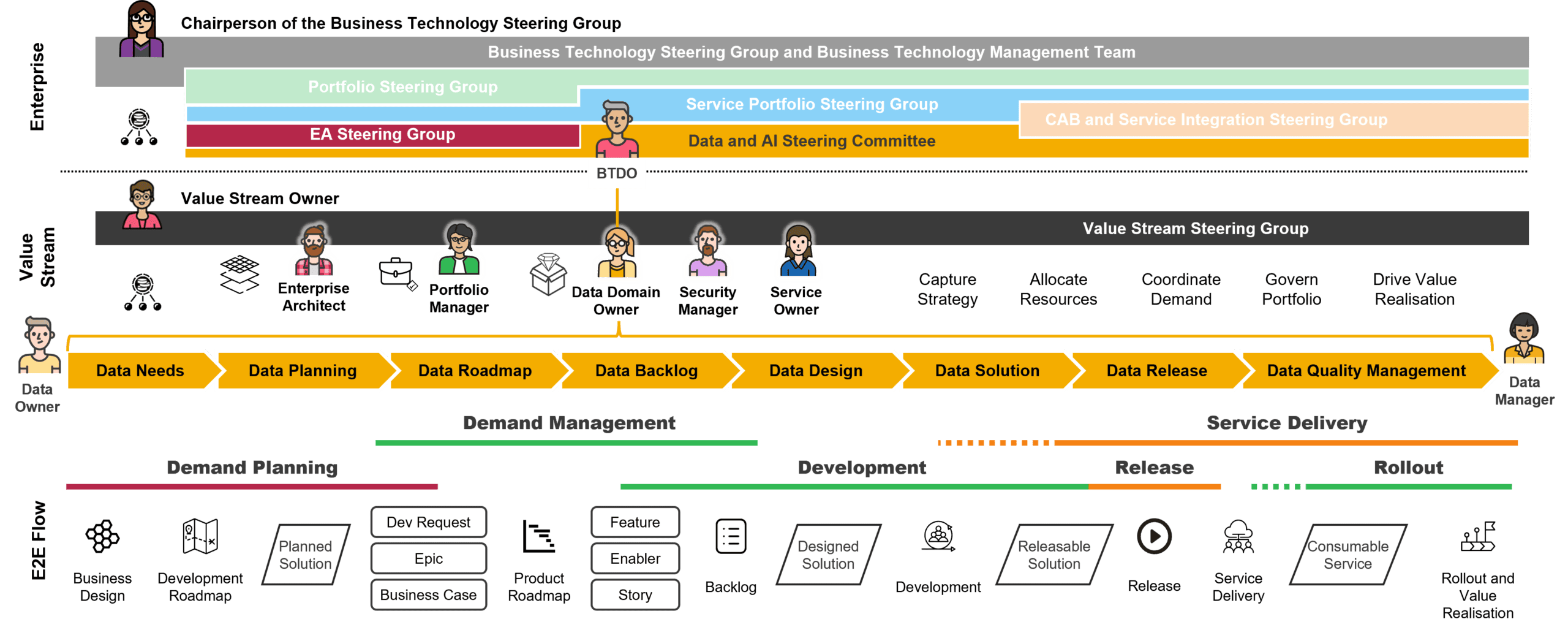
Data ownership carries clear obligations. Every data domain must have a clearly identified Data Domain Owner, and every critical data asset must have a clearly identified Data Owner. Ownership should not be shared. Many roles may contribute to producing, managing, protecting or using data, but accountability must rest with one clearly identified owner.
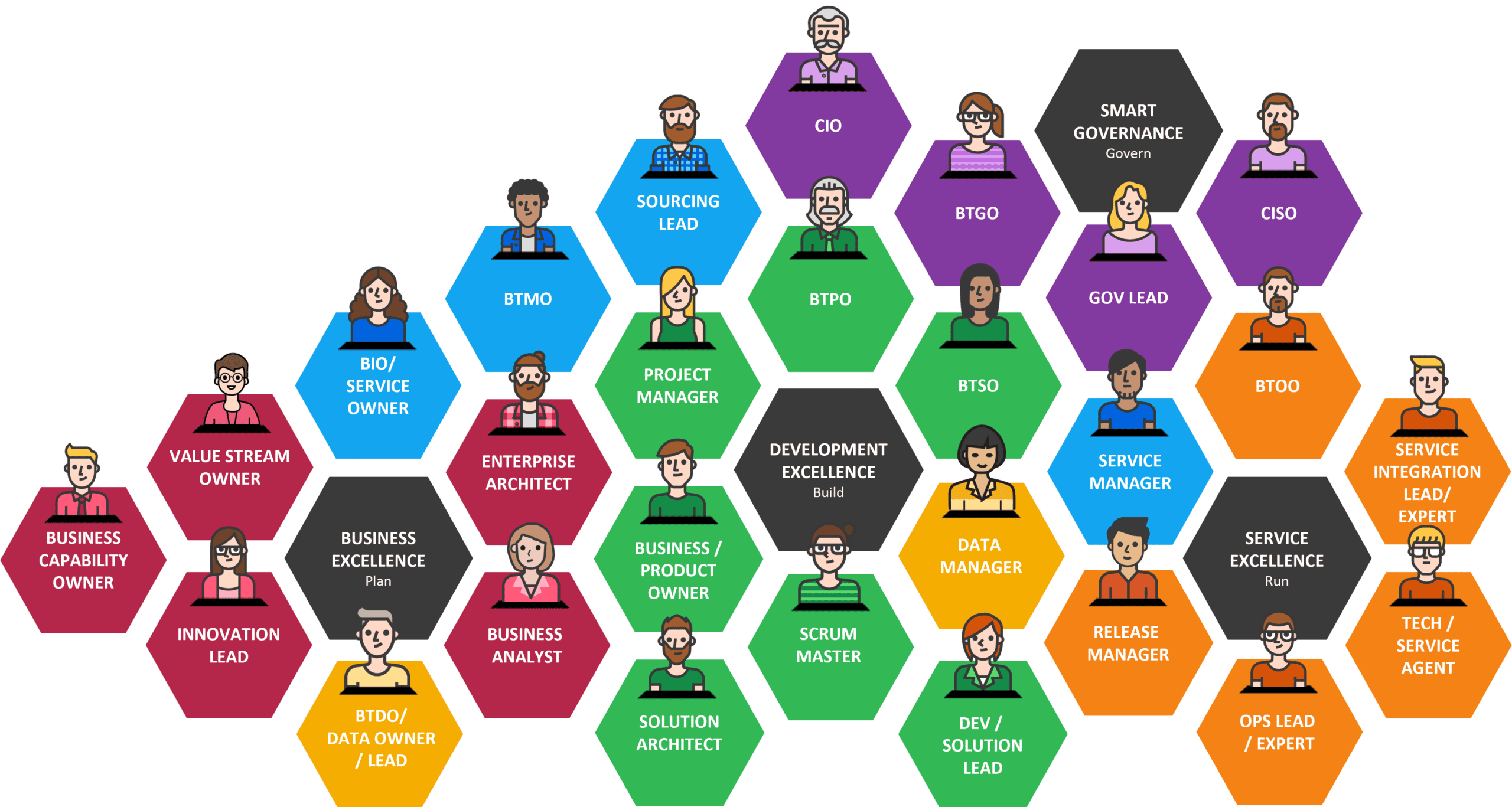
The Data Domain Owner provides domain-level accountability and decision authority, including direction across the data assets within the domain. The Data Owner is accountable for one or more assigned data assets, including their business meaning, quality, appropriate use and lifecycle direction. These responsibilities are supported, but not replaced, by Data Managers, Data Architects, data protection specialists and information security roles.
Data Domain Owners and Data Owners have distinct responsibilities. At the domain level, the Data Domain Owner provides overall accountability and direction, while Data Owners are responsible for the data assets within the domain. These responsibilities include:
Ownership therefore includes both decision rights and duties, as well as ongoing oversight of development and service performance for service areas within scope. Without this balance, data quality deteriorates, investment decisions are deferred, and the organisation’s ability to rely on data is weakened.
Data governance is not a separate control layer. It is part of how the organisation plans, develops, operates and improves its services, processes and AI-enabled capabilities. Governance ensures that data-related decisions are made deliberately, transparently and in line with business objectives.
Governance is anchored in the data and AI discipline and expressed through practical mechanisms such as principles, policies, standards and working instructions. These are applied directly in development work, operational processes, reporting, automation and advanced analytics. The objective is not to create documentation for its own sake, but to ensure that data is created, changed, accessed and used in a controlled and value-creating way.
All initiatives that create, modify or use data are expected to:
Data governance is coordinated through permanent steering and decision structures that operate alongside service, portfolio and technology governance. The Business Technology Data Officer (BTDO) orchestrates these governance practices and ensures that ownership, standards, data-related decision-making and data governance routines are embedded into the BTS operating model. This ensures that data is considered as part of overall business development, not treated as a separate or technical concern.
Data ownership includes responsibility for making investment needs visible and prioritising them at the appropriate level. Data Owners identify investment needed to maintain or improve their assigned data assets. Data Domain Owners consider these needs across the domain and provide direction where priorities, dependencies or trade-offs span several data assets. This includes balancing cost, risk and business benefit over time.
Treating data as a business asset means making explicit choices about where to invest, where to maintain and where to accept limitations. Not all data can receive the same level of attention. Governance provides the framework for making these trade-offs visible and consistent across domains.
This investment responsibility is especially important when data is used in automation or AI-enabled capabilities. Poor data quality may no longer result only in weak reporting. It may lead to incorrect decisions, unreliable service behaviour, poor customer experience or unclear accountability. For this reason, data investment decisions must be connected to business value, operational risk and the level of reliance placed on the data.
The use of advanced analytics, automation and AI is built on data ownership and governance. Capabilities that automate or augment decisions require clear accountability for purpose, change, behaviour and outcomes.
The same single-owner principle applies when data is used by AI-enabled capabilities and agents. A data asset needs one accountable Data Owner, and AI-enabled work must also have clear business accountability for how the capability is used, what it is allowed to do, and how its outcomes are monitored. Specialist roles may support design, development, validation, security and operations, but accountability cannot disappear into teams, platforms or algorithms.
This alignment ensures that data, automation and AI are managed coherently as evolving business assets rather than isolated technical solutions. Responsible AI-enabled work depends on clear data ownership, clear accountability for use, transparent governance and ongoing oversight.
Governance is an ongoing discipline. From the moment data is created, the organisation must monitor quality, manage access, enforce standards and respond to change.
As business needs, regulations, services and technologies evolve, ownership and governance arrangements must be reviewed and adjusted. Regular review of critical data, ownership responsibilities and investment priorities ensures that governance remains relevant and proportionate.
Sustained governance keeps data useful, trusted and controlled over time. It ensures that data remains a business asset that can support decisions, services, automation and AI-enabled work without weakening accountability or increasing unmanaged risk.