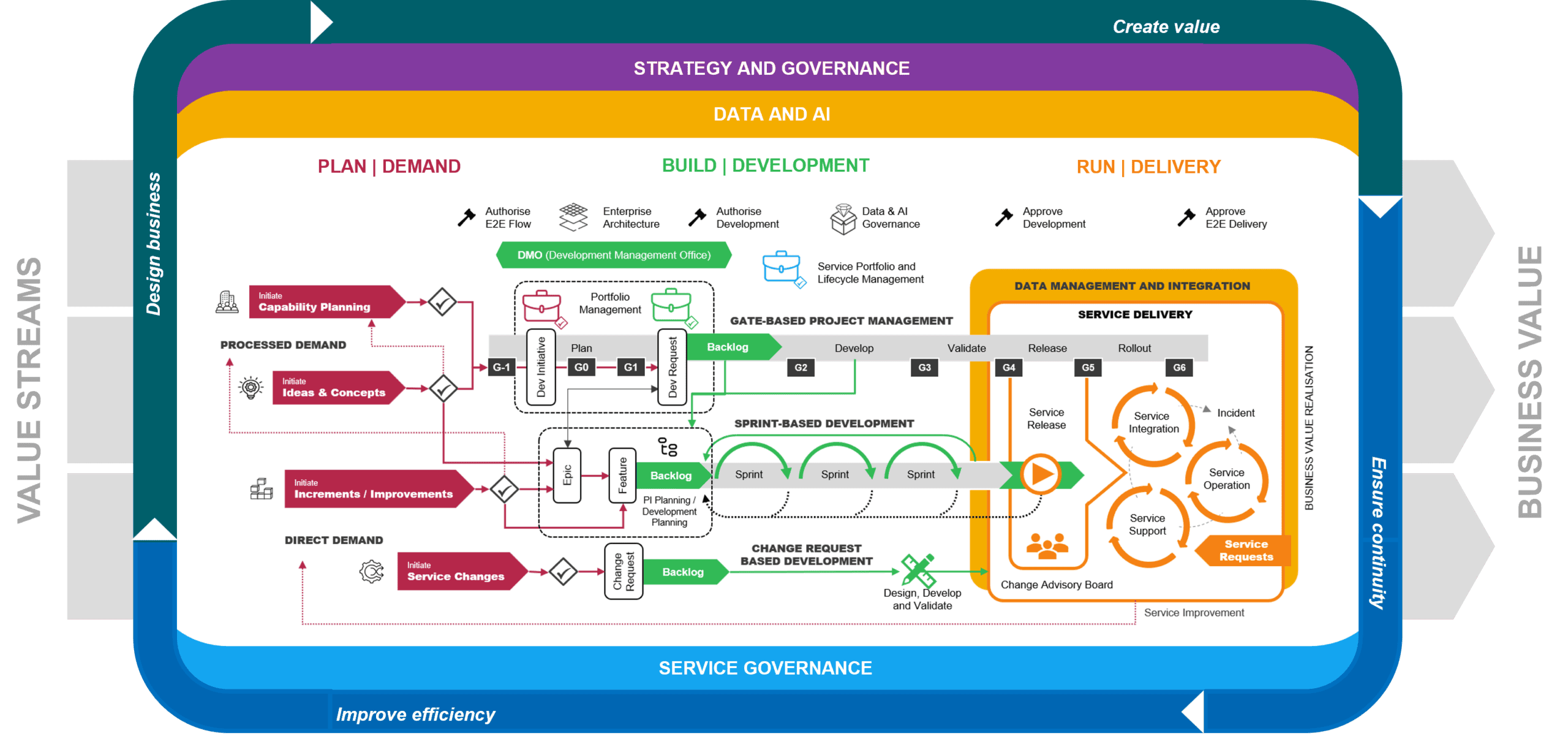
The demand and development portfolio is a business technology capability that governs and supports stakeholders in the prioritisation and approval of development initiatives, as well as assisting with resourcing, execution and realisation of business value. It operates as part of end-to-end governance and provides controlled visibility from business needs through development execution to delivery outcomes.
Minimum Viable Governance ensures that development work contributes to business objectives while maintaining flow efficiency. It balances agility and control by applying portfolio management to larger development needs, whereas smaller needs proceed directly to backlog-based demand management.
As AI accelerates business design, experimentation and solution planning, more ideas can become development candidates faster. This makes portfolio discipline more important, not less. The Development Portfolio ensures that AI-enabled development is prioritised based on business value, readiness, data dependencies and governance needs before development capacity is committed.
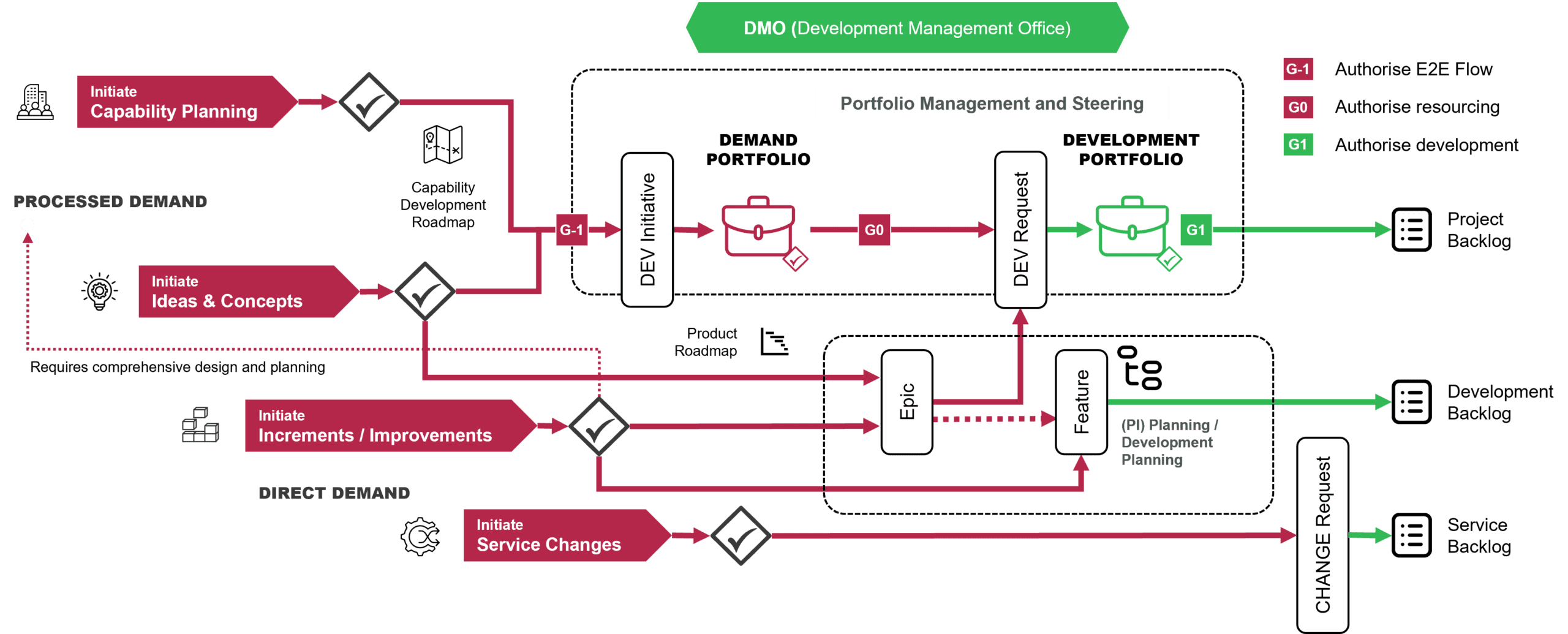
Value streams operate as portfolios and initiate their development needs via the demand portfolio. Once demand planning is complete, development items move through the development portfolio to the development phase. If value streams are adequately financed, resourced and mandated, they are empowered to make their own portfolio decisions.
Value streams govern development items within their scope end-to-end by providing portfolio-level steering, while the development portfolio provides cross-value stream coordination, enterprise-level visibility and dependency management. This ensures that development across value streams remains aligned, prioritised and resourced consistently.
The development portfolio provides a structured view of how development items progress from planning into execution. Portfolio-level governance focuses on development initiatives and development requests, including epics, which act as control points for prioritisation, resource allocation and alignment with business objectives. More granular items, such as features, enablers and user stories, are managed within development planning practices such as PI planning and team backlogs.
The Development Management Office (DMO) plays a central role in enabling this flow. It supports the preparation and progression of development initiatives and requests, facilitates coordination across value streams and end-to-end flows, and helps resolve dependencies and conflicts. The DMO also ensures that common portfolio practices, tools and governance are applied consistently, while maintaining transparency through a shared development management system that provides stakeholders with continuous visibility into the status and progress of all active development flows.
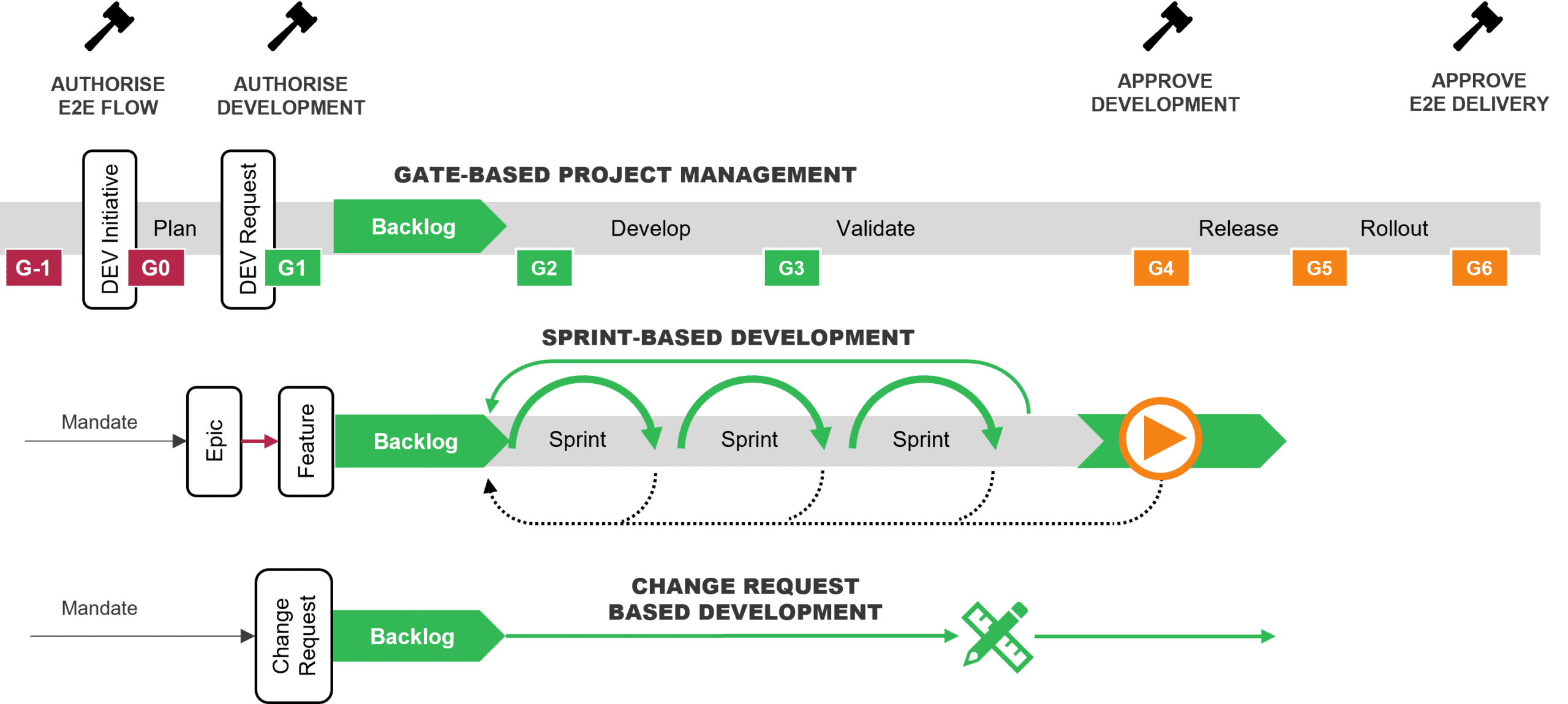
Development governance operates through unified value governance approval points that apply consistently across projects, agile development and solution maintenance. These approval points authorise the end-to-end flow, authorise development, approve development outcomes and approve end-to-end delivery.
By using common approval points aligned with method-specific governance practices such as stage gates, the development portfolio ensures consistent decision-making across different development models while preserving flexibility in execution.
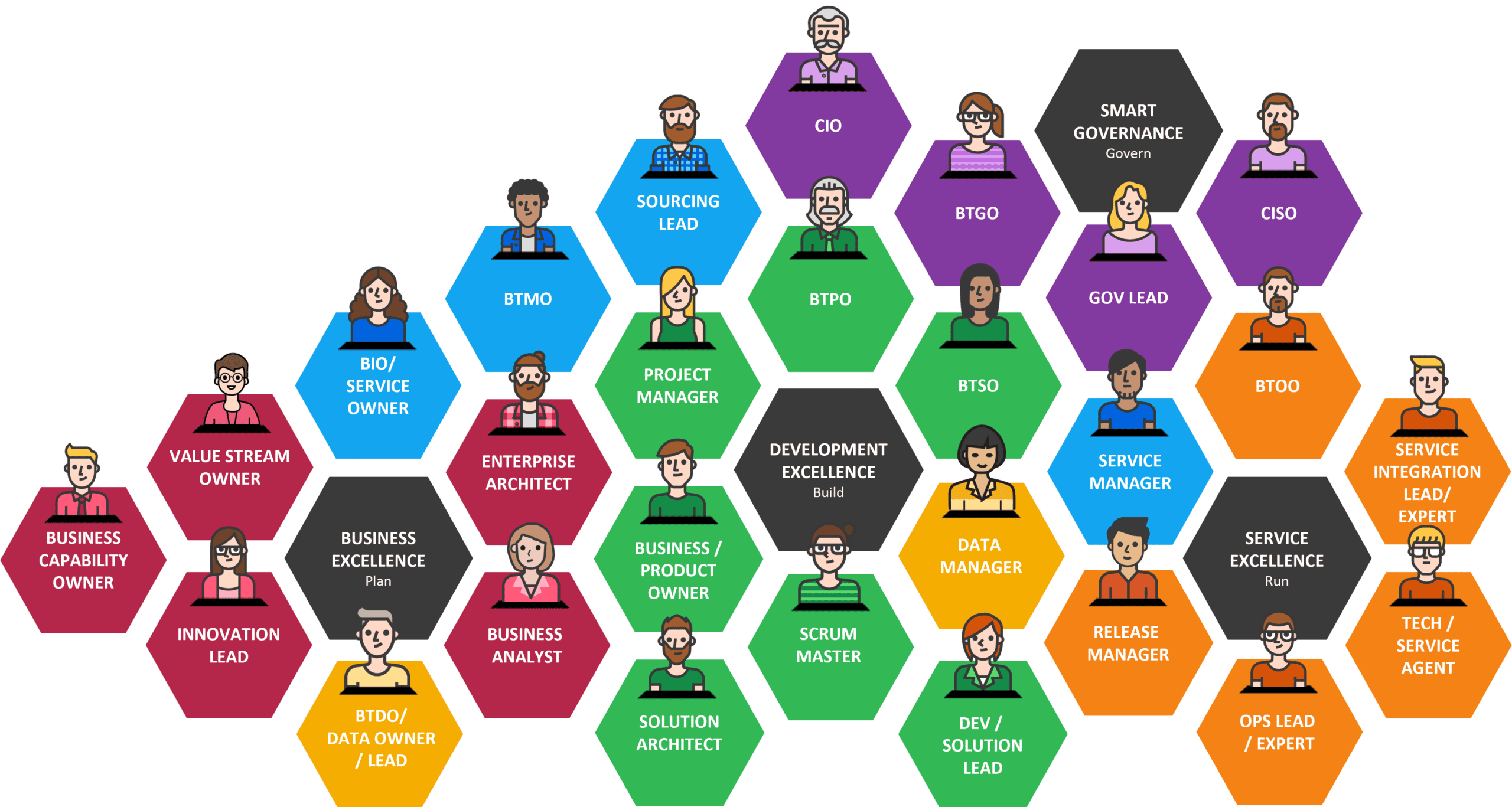
The Business Technology Portfolio Officer orchestrates portfolio practices and governance preparation across value streams. Portfolio decisions remain with the applicable Portfolio Steering Group or enterprise governance. The Development Management Office (DMO) coordinates the development portfolio in practice and acts as the operational backbone of portfolio management and development governance.
The DMO has a dual role. First, it coordinates portfolio management activities by supporting preparation of development initiatives and development requests for steering, maintaining portfolio transparency, managing dependencies and supporting prioritisation decisions. Second, it coordinates development governance by ensuring that approved initiatives are translated into executable backlogs through product increment planning, project planning or change request flows, depending on the development model.
Through this role, the DMO ensures that development efforts are aligned with business priorities, resource allocation is optimised across value streams and progress is visible at key value governance approval points. It supports planning collectives, tracks execution across projects and agile teams, and enables informed decision-making without introducing unnecessary overhead.
Business Owners own the business case and expected value of development initiatives. Value Stream Owners steer value-stream priorities and value trade-offs, while accountable Business Owners or Product Owners and the applicable development management roles steer execution within authorised work. Enterprise Architects contribute architectural insight to portfolio decisions and development governance, ensuring alignment with long-term capability development, enterprise architecture principles and cross-domain dependencies.
The development portfolio ensures that development capacity is focused on the most valuable work at the right time. Instead of maximising the number of ongoing initiatives, it emphasises completing high-priority items efficiently before starting new ones. This reduces congestion in development and enables faster and more reliable value delivery.
Prioritisation and resource allocation are continuously adjusted based on business priorities, dependencies and delivery progress. This allows the organisation to respond to changes, redirect effort when needed and maintain a steady and predictable development flow.
The development portfolio maintains visibility of development initiatives through rollout and early service use to support the validation of business value. Accountability for value realisation remains with the Business Owner, while operational performance and service lifecycle management are handled through service management practices.
The development portfolio tracks development initiatives beyond implementation into rollout and early service use. During this phase, the focus is on confirming that the expected business value is realised and that the solution delivers the intended outcomes in practice. This includes validating assumptions made during business design, assessing adoption and usage, and ensuring that the implemented solution meets the original business objectives.
Outcomes and lessons learned are fed back into portfolio steering to improve future prioritisation, investment decisions and governance practices. This feedback loop strengthens decision-making by providing evidence of what delivers value in practice, helping to refine business cases, improve planning accuracy and enhance overall portfolio performance.
Through this continuous learning cycle, the development portfolio supports the systematic improvement of both delivery effectiveness and business outcomes.