Data and AI turn information into business value only when they are deliberately directed, structured, owned, governed and improved. Data has always been essential to how organisations operate, make decisions and create value. Its value is realised when the organisation knows which data matters, who is accountable for it, and how it should be managed and used. With AI and increasing automation, this becomes even more important.
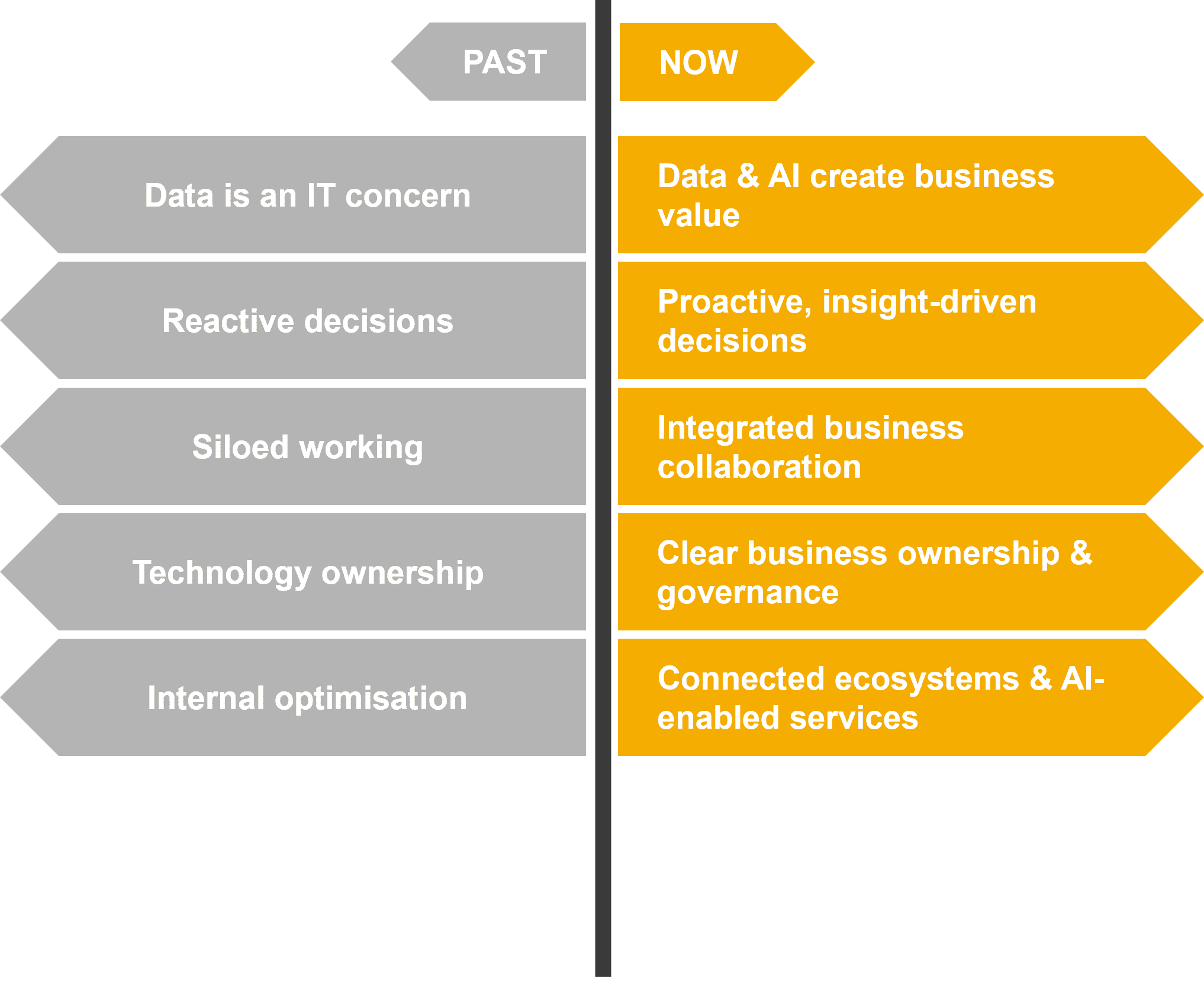
For a long time, data was closely tied to business applications. These applications determined how data was organised, checked and used, and they ensured consistency through built-in rules. As a result, data management was often handled as part of large application programmes. Organisations introduced common data definitions, connected applications to share information, and clarified responsibility for data quality as part of application-led change.
This approach created order and control, but it also tied data closely to individual business applications. Data decisions often followed technology plans rather than business needs, and data quality and consistency depended largely on how well these applications were designed and maintained.
Digitalisation changed this model. Large volumes of data began to be collected outside legacy systems and stored on shared data platforms. Advanced analytics and predictive models emerged as capabilities that operated across system boundaries. Data and analytics became a distinct area of expertise, with their own tools, skills and investment decisions.
At the same time, digital channels moved business applications, services and users onto the internet and mobile devices. This increased the exposure of data and made information security, access control, privacy and compliance central management concerns rather than purely technical topics.
Generative AI represents the next step in this evolution. It sits between traditional information systems and analytics. Like analytics, it reasons over data. Like systems, it can execute tasks and initiate actions. AI-enabled agents can analyse information, prepare decisions, interact with users and perform operational work with limited human involvement.
This fundamentally changes the role of data. Data is no longer only an input for automation, reporting or analysis. It becomes an operational asset that can directly influence actions, outcomes and customer experiences. As a result, weaknesses in data quality, ownership, access control or lifecycle management translate directly into business risk.
At this stage, organisations need a unified view of data and AI as a business discipline. Data has often been treated as a derivative of business strategy or system development. AI introduces new opportunities and risks that can actively shape operating models, services, customer experience and competitive position. This requires explicit leadership attention.
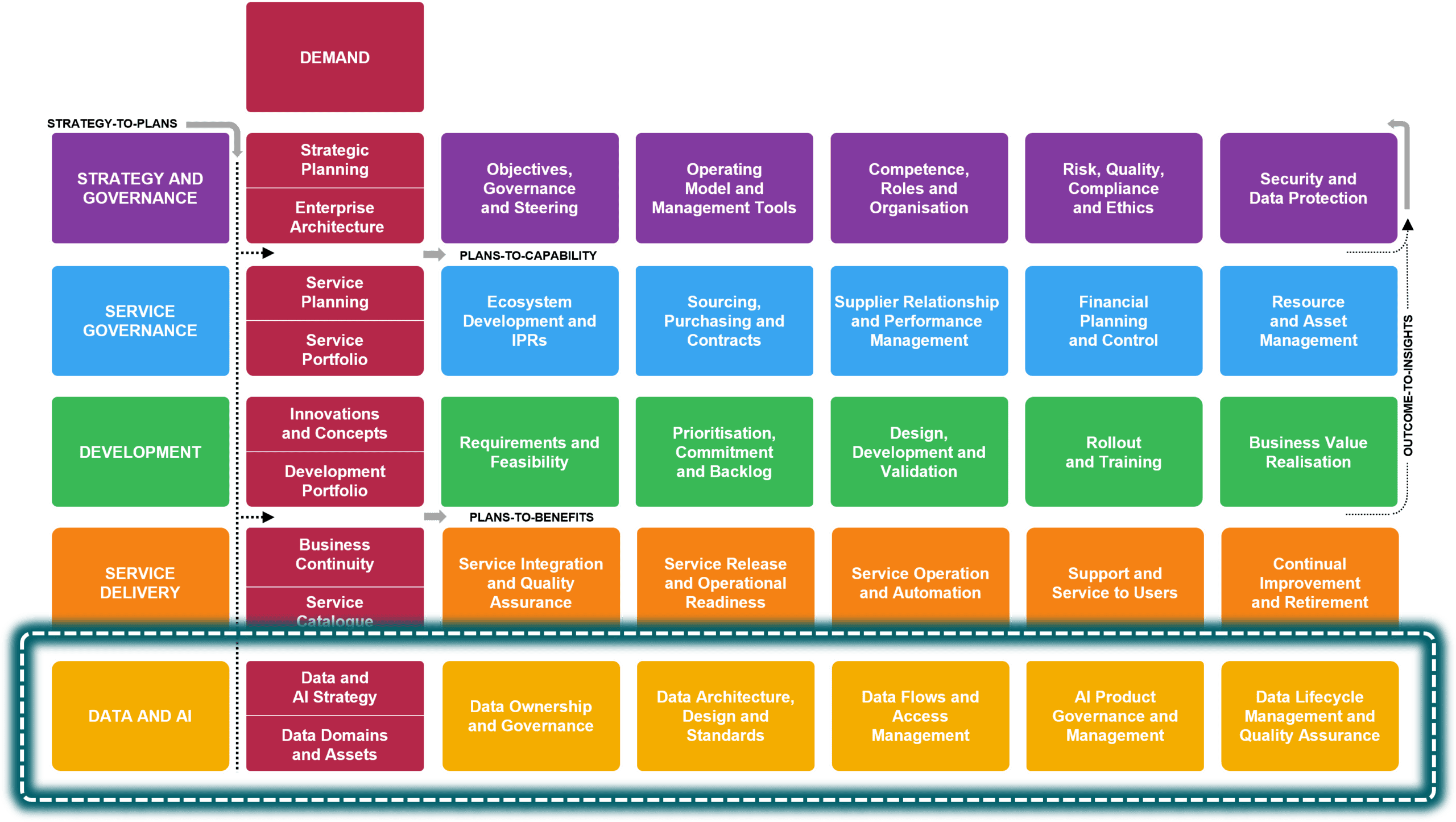
The data and AI discipline starts with data and AI strategy. The strategy defines where data and AI are expected to make a difference, what level of business impact is required, and how this impact is achieved in a controlled and sustainable way. It guides investment, aligns leadership expectations, and establishes a common frame for decision-making across business and technology.
A good data and AI strategy balances ambition with foundations. Some organisations need to strengthen basic data recording, integration, quality, protection and access control before scaling advanced use. Others start from high-impact business opportunities and build the required data, architecture and governance capabilities around them. In practice, both directions are needed. The role of the strategy is to make these choices explicit and ensure that ambition, investment and risk remain aligned.
The discipline then needs data domains and assets. Data and AI are used across many services, processes and development initiatives, and without a clear structure, data becomes fragmented. Data domains and assets provide a practical way to organise data so that it can be developed, governed and reused over time. They make it clear who is accountable, where decisions are made, and how data development is linked to broader business change.
Data domains provide stable units of accountability. Data assets make that accountability practical at a more manageable level. Together, they allow the organisation to classify which data has the highest value, which data requires sustained investment, and which data must be reliable mainly for continuity, compliance or basic operations.
The value of data depends on how deliberately it is shaped and managed. Data may exist in systems, platforms and documents, but it becomes valuable only when it is understood, trusted, accessible, protected and fit for purpose. Like a rough diamond, data has potential value, but that value is realised through deliberate refinement and proper use.
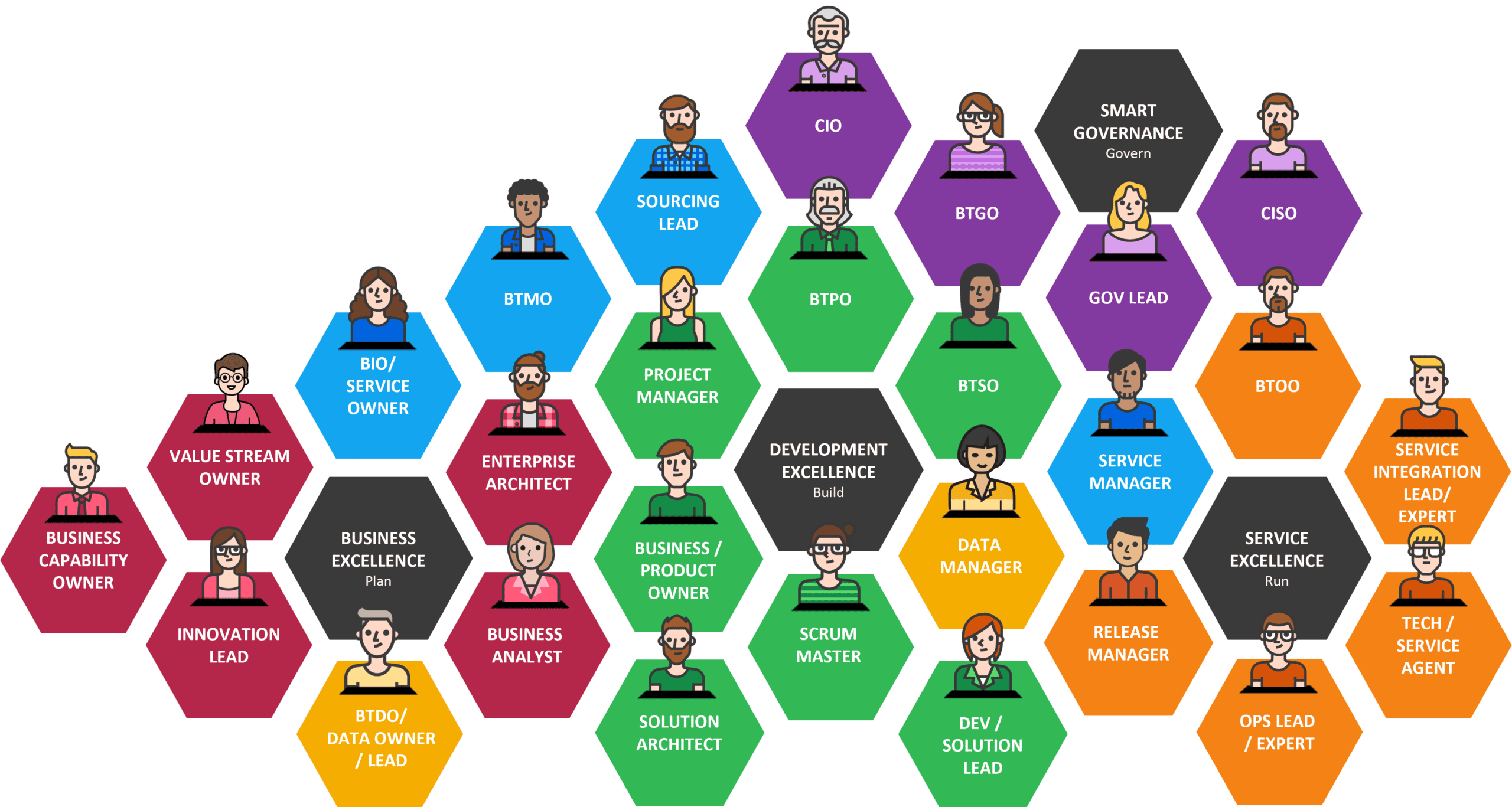
This is why ownership and governance are central to the discipline. Data ownership and governance ensure that data has clear business accountability and that data-related decisions are made as part of normal business management. The Data Domain Owner is accountable for the business meaning, direction and governance of a data domain, while the Data Owner is accountable for the business meaning, quality, appropriate use and investment needs of one or more data assets within that domain.
The Business Technology Data Officer (BTDO) orchestrates the data and AI discipline across the organisation. The BTDO ensures that data governance, standards, roles, decision structures and data-related practices are embedded into the business technology operating model rather than managed as a separate technical function.
As data moves beyond the systems where it was created, it needs explicit design and control. Data architecture, design and standards ensure that data is defined, structured, named, described and exchanged consistently. This makes data understandable and reusable across systems, services, analytics, automation and AI-enabled capabilities.
Traditional applications often hide business rules, validations and definitions inside system logic. When data is reused outside those systems, these embedded controls do not automatically follow. Data architecture and standards therefore make meaning, relationships, constraints and allowed use explicit, so that data can be safely reused without losing its authority or business context.
Data flows and access management ensure that data moves safely and is used under the right authority. Data flows define how data is produced, transformed, consumed and updated across systems, platforms, services and AI-enabled capabilities. Access management defines who or what may read, change, create or trigger actions based on that data.
This becomes especially important as AI agents and digital workers become part of operational work. Access must distinguish between reading data, changing data, creating records, supporting decisions and triggering business commitments. The same data may be safe for analysis but not safe for automated action without additional controls.
AI-enabled capabilities must be governed according to their business impact, autonomy and operational role. AI product governance and management ensures that AI embedded in applications, personal AI tools, custom AI solutions, and industrialised AI agents are managed with proportionate ownership, validation and oversight.
AI becomes a managed business capability when it influences decisions, actions, services or customer outcomes. At that point, it needs clear purpose, defined operating boundaries, controlled data access, validation with users, release discipline and continuous monitoring. The more AI is allowed to decide, act or interact on behalf of the organisation, the clearer its ownership and governance must be.
Industrialised AI increases this need. When organisations develop, configure, deploy and operate AI agents and digital workers at scale, they need repeatable practices, reusable components, clear roles, behavioural boundaries, escalation paths and lifecycle management. AI should increase productivity and responsiveness without making accountability unclear.
Data does not remain reliable by default. Business needs change, services evolve, regulations develop, and data is reused in new ways. Data lifecycle management and quality assurance ensure that data remains reliable, relevant and fit for purpose throughout its lifecycle.
Lifecycle management covers how data is introduced, designed, operated, improved and eventually decommissioned. Quality assurance prevents issues at the source, makes quality visible and ensures that corrective and preventive actions are prioritised according to business impact.
This is critical in AI-enabled environments. Poor data quality may no longer result only in weak reporting. It may affect recommendations, automated actions, customer interactions and operational decisions. Quality assurance therefore becomes a direct part of business control.
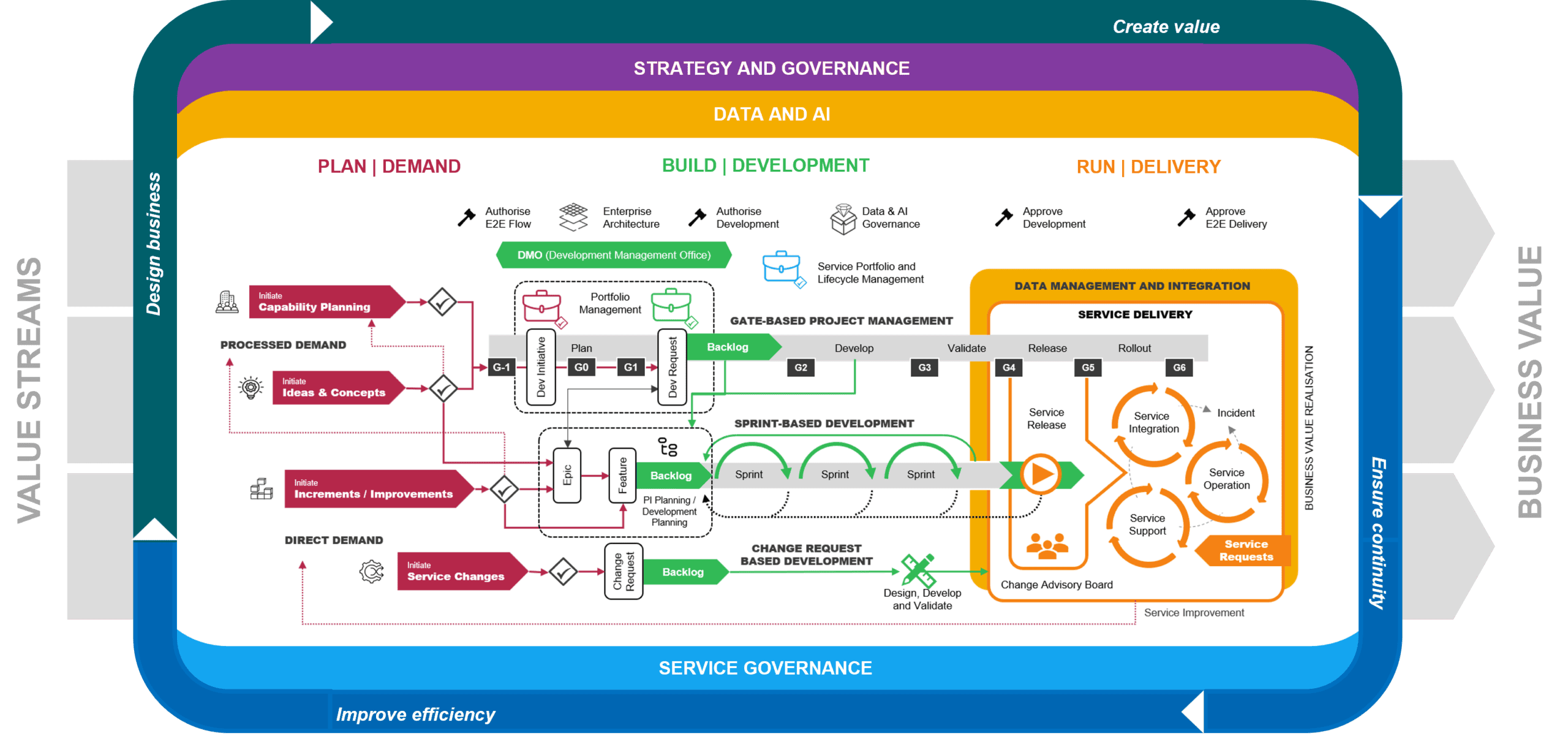
The data and AI discipline brings these capabilities together into one coherent management discipline. Data and AI strategy defines direction and investment focus. Data domains and assets provide structure for ownership and reuse. Data ownership and governance make accountability real. Data architecture, design and standards make data understandable beyond individual systems. Data flows and access management ensure controlled movement and use. AI product governance and management ensures that AI-enabled capabilities remain purposeful and accountable. Data lifecycle management and quality assurance keeps data reliable over time.
Together, these capabilities ensure that data and AI create value without weakening accountability, trust or control. They make data a governed operational asset and ensure that AI-enabled work develops as part of the business technology operating model, not as isolated experiments or uncontrolled technology adoption.