A Service catalogue defines the services and service requests the organisation commits to provide. It makes service scope, delivery model, usage and cost transparent, ensuring that services remain aligned with business needs and economically sustainable. By turning implicit expectations into explicit commitments, the service catalogue supports controlled growth, clear accountability and predictable service delivery.
The service catalogue protects both users and delivery capacity. For users, it clarifies what services are available, who can use them and how they can be accessed. For service owners and delivery teams, it channels routine needs into predictable fulfilment paths and reduces uncontrolled demand, ambiguity and manual coordination.
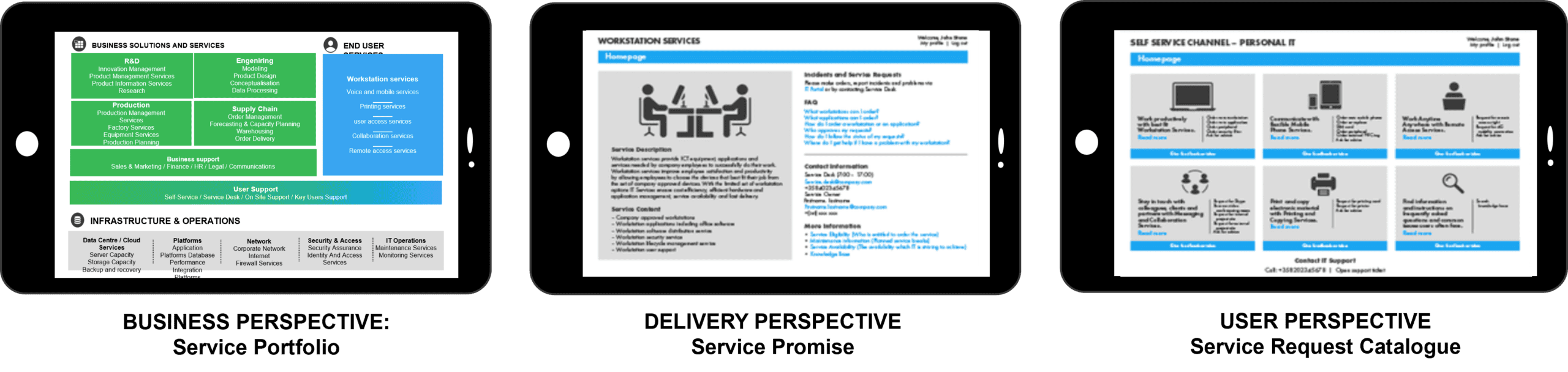
From a business perspective, the service catalogue ensures that services are intentional, clearly defined and aligned with business needs. Each service represents a conscious funding decision, with defined scope, target users and expected business value.
Service scope defines what is included and excluded, preventing uncontrolled expansion of commitments. Intended users are specified to link service consumption to business outcomes and avoid unstructured demand. Service levels are defined based on business criticality, balancing required performance and availability with cost.
Cost transparency is integral. Each service has a clear funding model and cost structure, enabling informed decisions on service levels, usage and expansion. Changes in scope, service levels or user base require explicit evaluation of value and cost, ensuring that growth is controlled and justified.
The service catalogue is closely linked to the service portfolio. New services are introduced based on validated demand, existing services are adjusted as needs evolve, and services are retired when they no longer deliver sufficient value. This ensures that the service landscape remains relevant, efficient and aligned with business priorities.
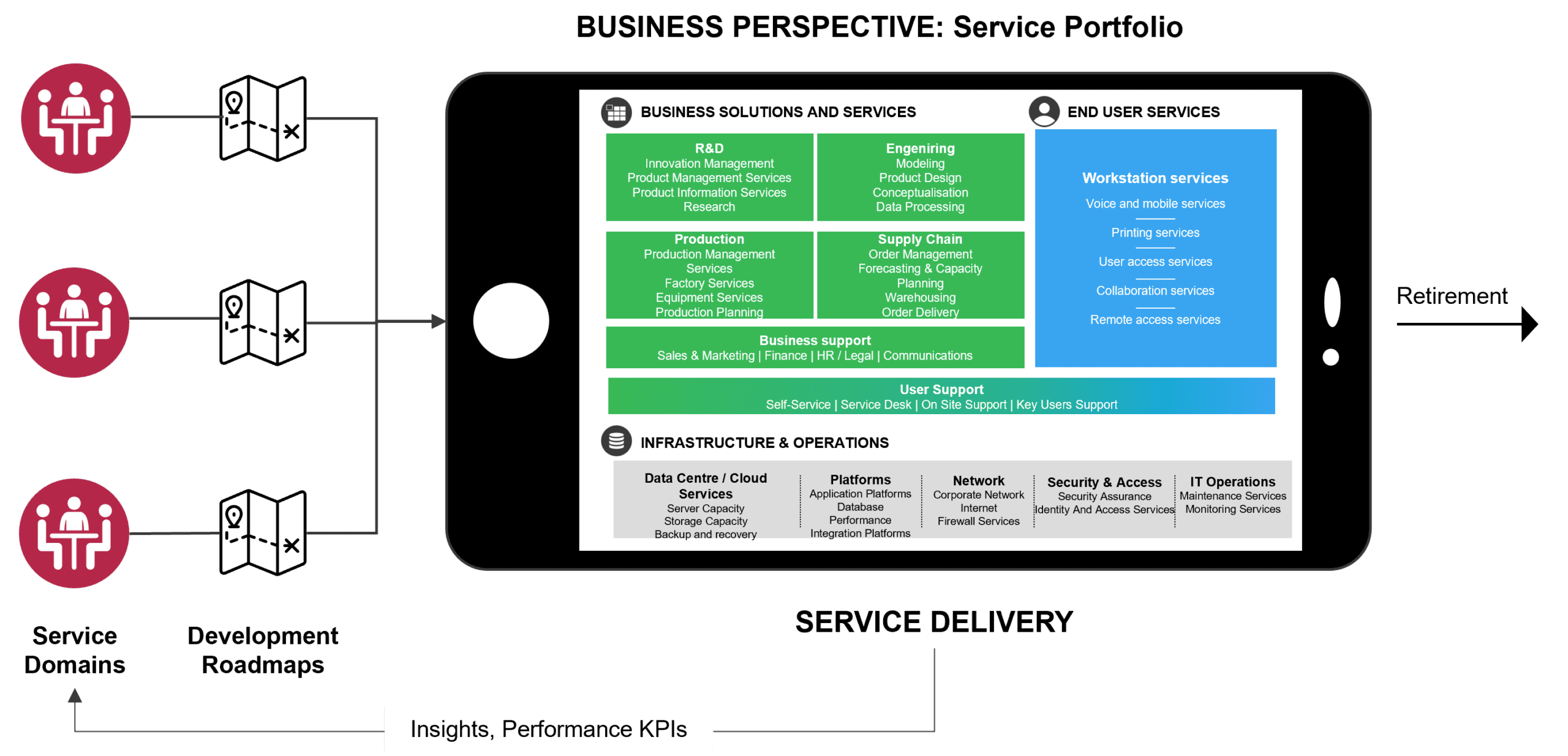
From a delivery perspective, the service catalogue defines how services are delivered across business, technology and external partners. It establishes a shared understanding of service scope, delivery responsibilities and performance expectations.
Each service has a defined delivery model that combines internal capabilities and external providers where relevant. Roles and responsibilities across business, technology and vendors are clearly defined to ensure coordinated delivery and accountability.
Service levels translate business needs into operational targets such as availability, response times and support coverage. These targets are designed to be achievable and cost-effective, reflecting trade-offs between performance and cost.
Standardisation is applied where possible to improve efficiency and scalability. Common services are defined once and delivered consistently, reducing complexity and avoiding duplication. At the same time, flexibility is maintained for services that provide strategic differentiation.
The service catalogue provides the foundation for managing dependencies across systems, platforms and suppliers, ensuring that service delivery remains reliable and aligned with agreed commitments.
From a user perspective, the service catalogue defines how services are accessed and used. It provides clarity on available services, eligibility and usage conditions, enabling users to understand what they can expect and how to consume services effectively.
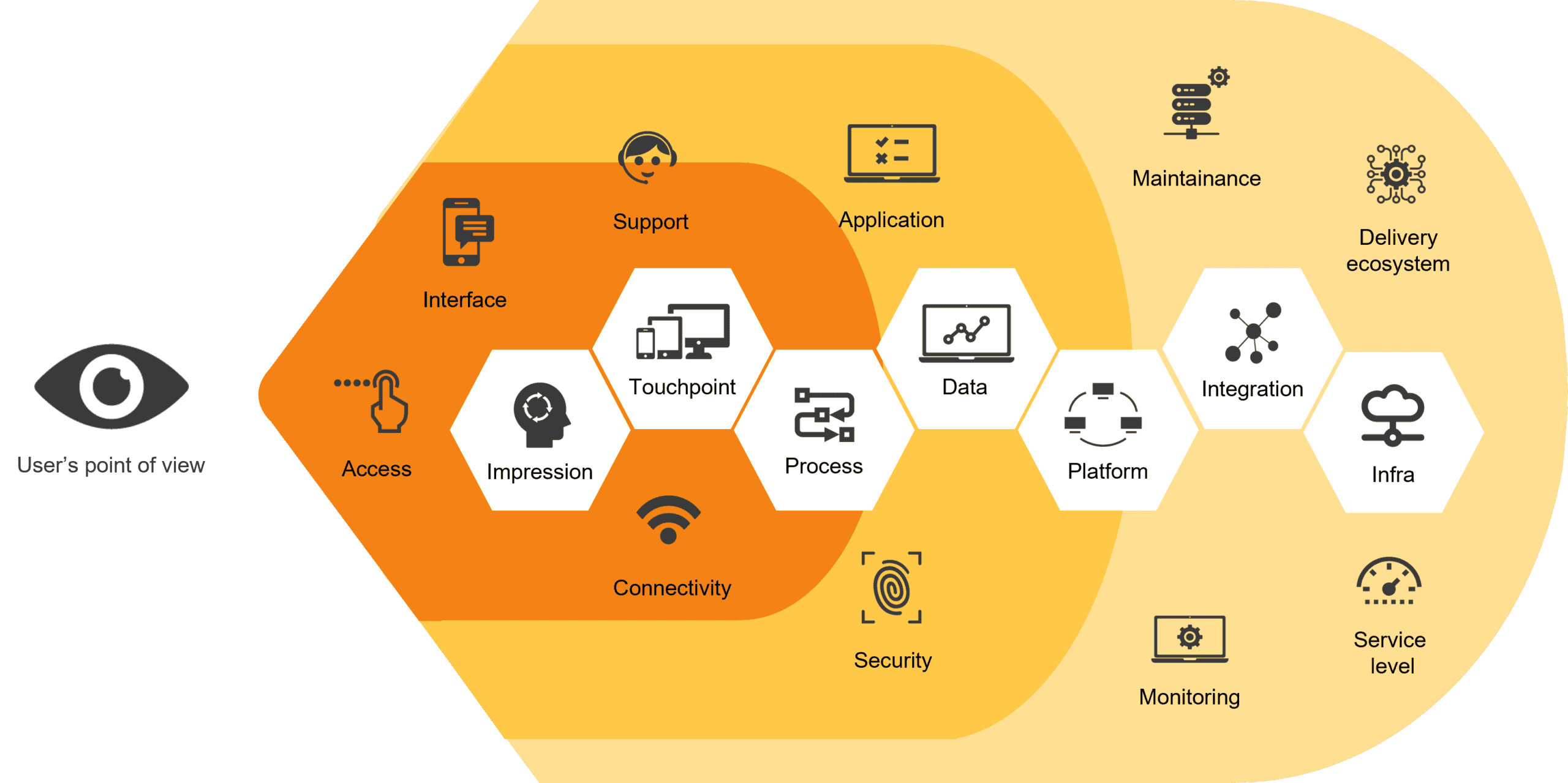
Each service defines who can use it, how access is granted, and what processes are followed for onboarding, changes and support. This ensures controlled access, consistent user experience and efficient handling of requests.
Standardised services simplify consumption by providing clear processes and predictable outcomes. Users interact with services through defined channels, reducing ambiguity and improving usability.
By making services visible and understandable, the service catalogue improves transparency, reduces unnecessary demand and supports efficient use of organisational capabilities.
As AI agents and AI-enabled products become part of services, the service catalogue must evolve from a manually maintained service listing towards an automatically generated or semi-automated catalogue. This applies to AI-enabled capabilities provided for organisational use, not to personal AI agents or those shared informally with a small group of employees. These capabilities can be created, changed and released much faster than traditional services, and may depend on data, prompts, models, tools, integrations and operating boundaries that change over time.
AI-enabled services should be included in the service catalogue when they are approved and made available for organisational use. Catalogue information should describe their purpose, intended users, access conditions and support model. Executable AI capabilities that require managed governance are registered in the AI repository, which maintains information on ownership, authority, access, behavioural boundaries, monitoring and lifecycle status.
Where possible, catalogue information should be generated from development, release, identity, monitoring and service management tools. Automated or semi-automated catalogue management helps keep catalogue entries aligned with approved services and their operational status.
Technical components, experimental agents and internal automation do not need to be exposed in the service catalogue until they become part of an approved, consumable service. Catalogue entries may link to or use information from the AI repository where relevant. In this way, the service catalogue provides a clear view of AI-enabled services available for organisational use, while the AI repository provides the detailed governance view of executable AI capabilities.
A well-managed service catalogue strengthens governance, cost control and operational stability. It ensures that services are clearly defined, economically justified and aligned with business priorities.
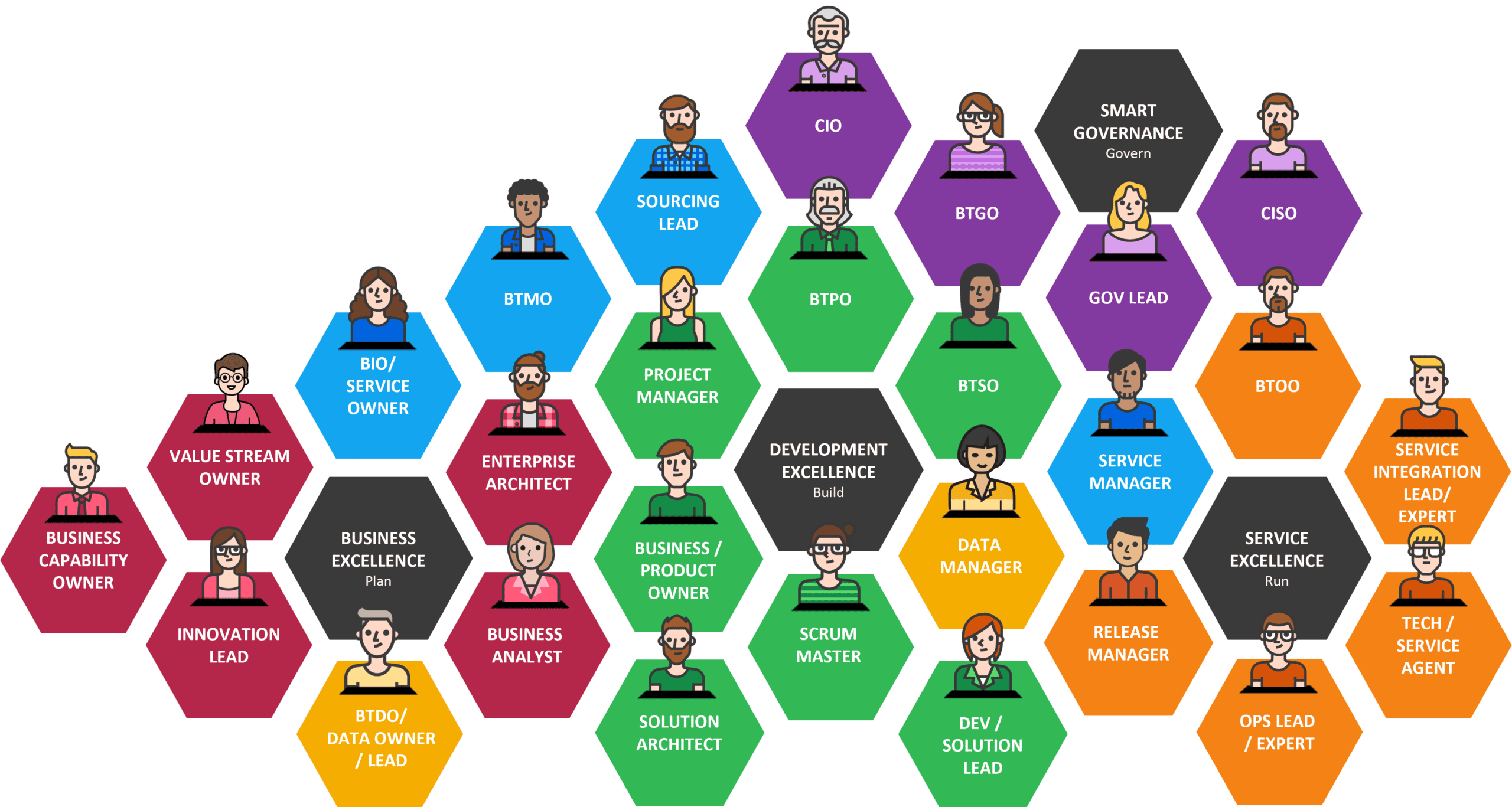
The Service Owner is accountable for ensuring that catalogue content reflects service scope, value, service levels and lifecycle direction. The Service Manager ensures that catalogue entries, request models and fulfilment paths remain accurate, usable and aligned with operational delivery.
By linking service definition, delivery and usage into a single structure, the service catalogue enables informed decision-making, protects capacity and supports continuous alignment between business needs and service delivery.