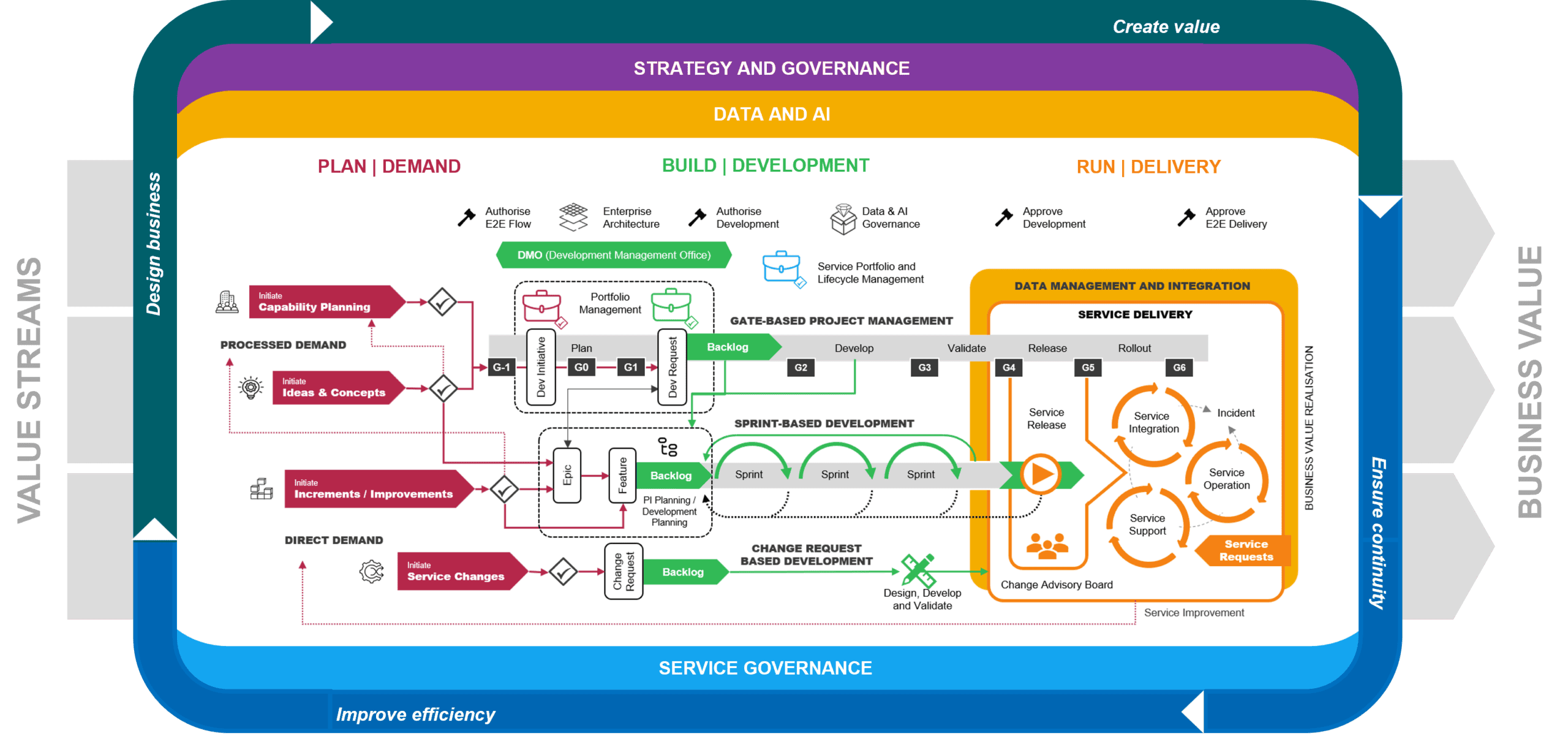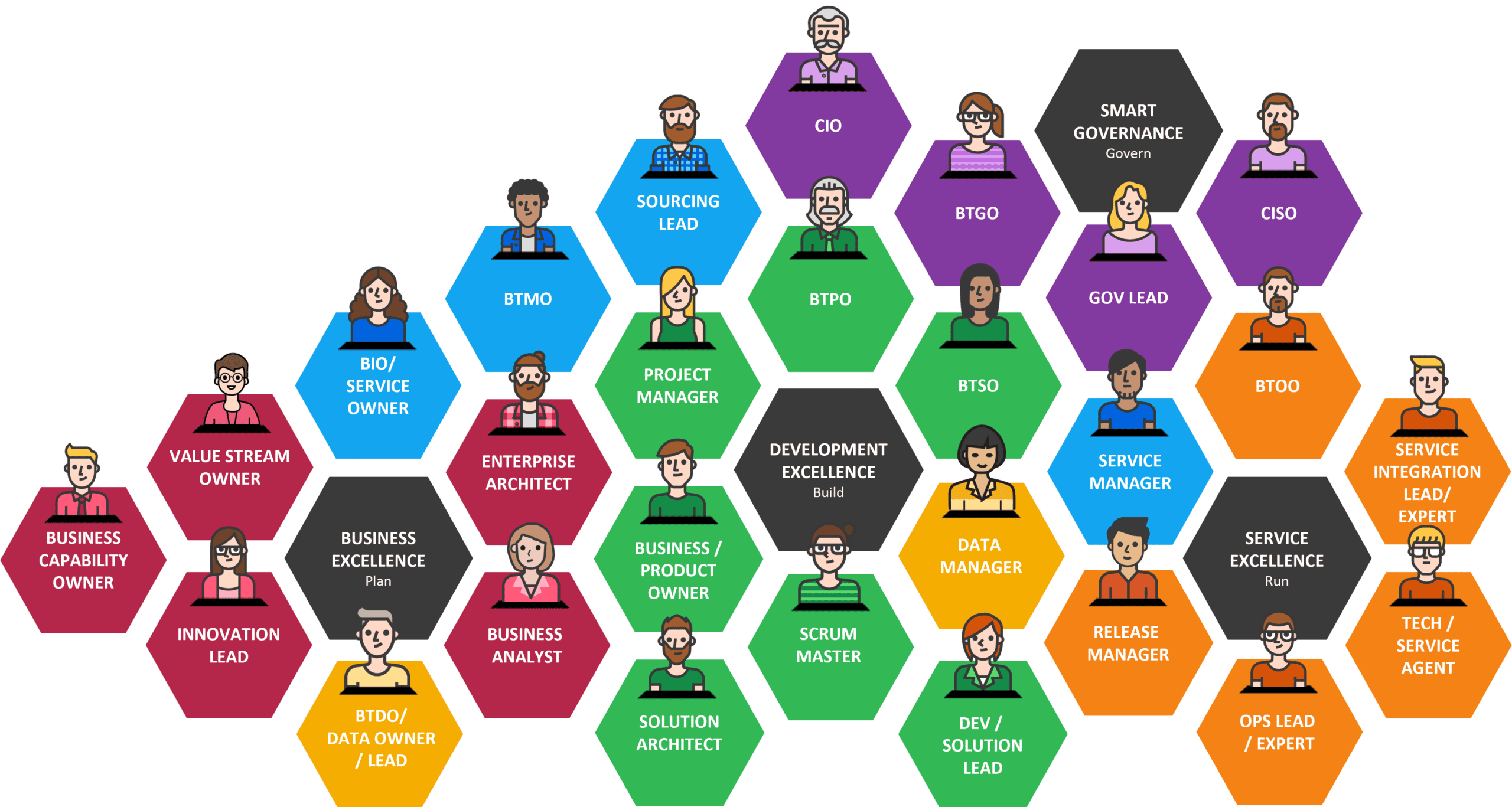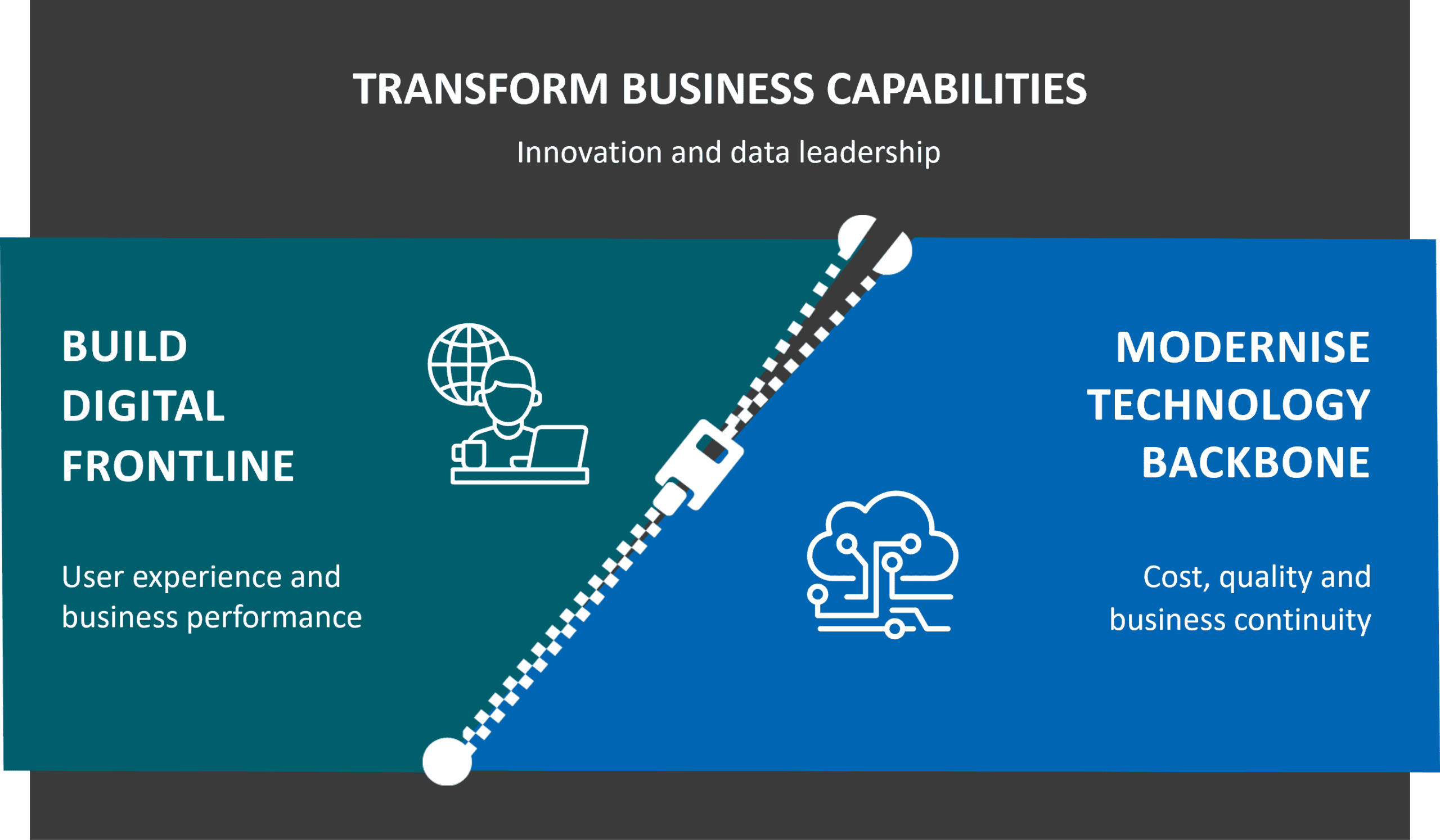
Ecosystem development ensures that the organisation effectively leverages external partners, platforms, and networks to create business value. Modern organisations increasingly combine internal capabilities with external innovation, technology, data, and delivery capacity. Ecosystems therefore extend beyond traditional supplier relationships to include platform providers, technology partners, data ecosystems, and co-innovation networks.
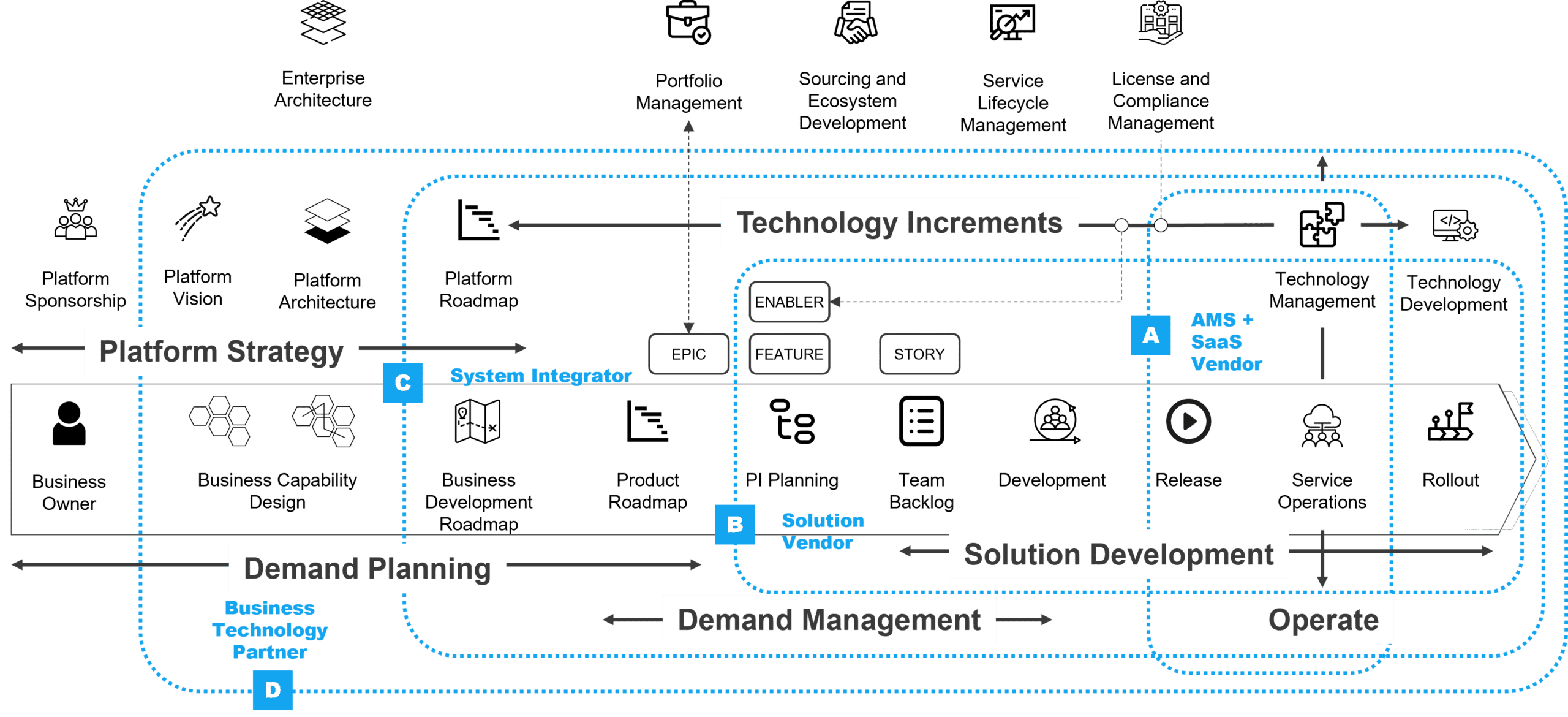
Services increasingly depend on external platforms, specialised providers, shared data, and AI-enabled capabilities. Ecosystem choices therefore influence not only technology direction, but also operational flexibility, service continuity, commercial leverage, and long-term business capability development.
Ecosystem choices shape long-term capabilities, flexibility, and competitiveness. The platforms, technologies, and partners an organisation selects influence how services evolve, how data is governed, and how effectively capabilities can be integrated across the organisation and its ecosystem.
Strong ecosystems provide access to innovation, scalability, shared development, and advanced data and AI capabilities. At the same time, they introduce reliance on external platforms, providers, and operational dependencies, which may increase switching costs and reduce flexibility over time. These dependencies must be understood and actively governed, particularly for critical services, operational continuity, data ownership, and long-term control of business capabilities.
Limiting ecosystem participation may reduce dependency exposure but can also restrict innovation, scalability, and access to shared capabilities. High-performing organisations actively participate in ecosystems while maintaining visibility into strategic dependencies, operational risks, and ownership boundaries. The objective is to build a balanced and reliable ecosystem rather than to eliminate dependency.
The Service Owner and Business Technology Management Officer (BTMO) ensure that ecosystem and platform choices remain aligned with long-term service direction, operational requirements, and business priorities.
Ecosystem value is increasingly created through collaboration rather than purely transactional sourcing. Organisations work with partners not only to deliver services, but also to co-develop capabilities, operational models, and innovations through shared roadmaps, integrated development practices, and continuous interaction.
When collaboration focuses only on cost and delivery, the potential for innovation and service evolution remains limited. Shared objectives, aligned incentives, and coordinated lifecycle planning enable stronger outcomes and faster adaptation as business and operational requirements change.
This becomes increasingly important in data-driven and AI-enabled environments where services evolve continuously through data, integrations, automation, and operational learning. Value creation may span multiple organisations, platforms, and operational providers simultaneously, requiring clear governance and accountability across the ecosystem.
The Service Manager plays an important role in aligning ecosystem collaboration with service lifecycle objectives, operational realities, and ongoing capability development.
As ecosystems become more integrated, ownership and usage rights become increasingly important. Technology solutions, data, algorithms, configurations, process models, and AI-enabled capabilities represent valuable business assets whose ownership and usage rights directly influence long-term business value.
Intellectual property includes software, data, algorithms, integrations, configurations, and ways of working. In collaborative development environments, ownership is rarely straightforward, which makes clear agreements essential. These agreements define who owns the results, how they may be used, and under what conditions they may be shared, extended, or commercialised.
Artificial intelligence increases the importance of ownership governance. AI-enabled services may combine proprietary data, external platforms, continuously evolving models, and generated outputs. Ownership and control may therefore extend across data, models, operational behaviour, outputs, and lifecycle improvements. Agreements need to clarify how these elements are governed, how value is shared, and how long-term control remains aligned with business interests.
Organisations may either own intellectual property or acquire rights to use it. These rights determine how solutions can be used internally, integrated into customer-facing services, shared across the ecosystem, or transferred to alternative providers. Commercial and operational flexibility therefore depends heavily on how ownership and usage rights are structured.
Commercial models increasingly extend beyond transactional purchasing towards outcome-based agreements, platform consumption models, and value-sharing arrangements. In data-driven ecosystems, data itself may become part of the commercial exchange, requiring careful consideration of ownership, usage rights, operational dependency, and long-term business value.
The choice between ownership and usage rights directly affects both cost and long-term flexibility. Broader ownership rights may increase cost, while limited rights may restrict service evolution, operational control, or future ecosystem choices. Organisations therefore need a clear approach to which capabilities and intellectual property are treated as strategic business assets and which can be shared to enable stronger ecosystem collaboration and faster innovation.
Ecosystems require active governance and continuous development. Technologies, platforms, providers, and operational dependencies evolve continuously, which means that ecosystem structures cannot remain static.
Ecosystem governance includes selecting and evolving partners, aligning platform and service roadmaps, managing dependencies, monitoring ecosystem performance, and maintaining visibility into operational, commercial, and lifecycle risks. It also includes identifying new capabilities and ecosystem relationships that strengthen long-term service development and operational resilience.
Some organisations take an active role in shaping ecosystems around their own platforms, services, or data capabilities by defining standards, integration models, governance practices, and collaboration principles for the wider ecosystem. This role becomes increasingly important in platform-based and data-driven operating models.
Effective ecosystem governance provides direction, accountability, and lifecycle control while preserving flexibility, trust, and incentives for innovation. It ensures that ecosystem relationships continue supporting business priorities, operational continuity, and long-term service evolution as technologies and business requirements change.