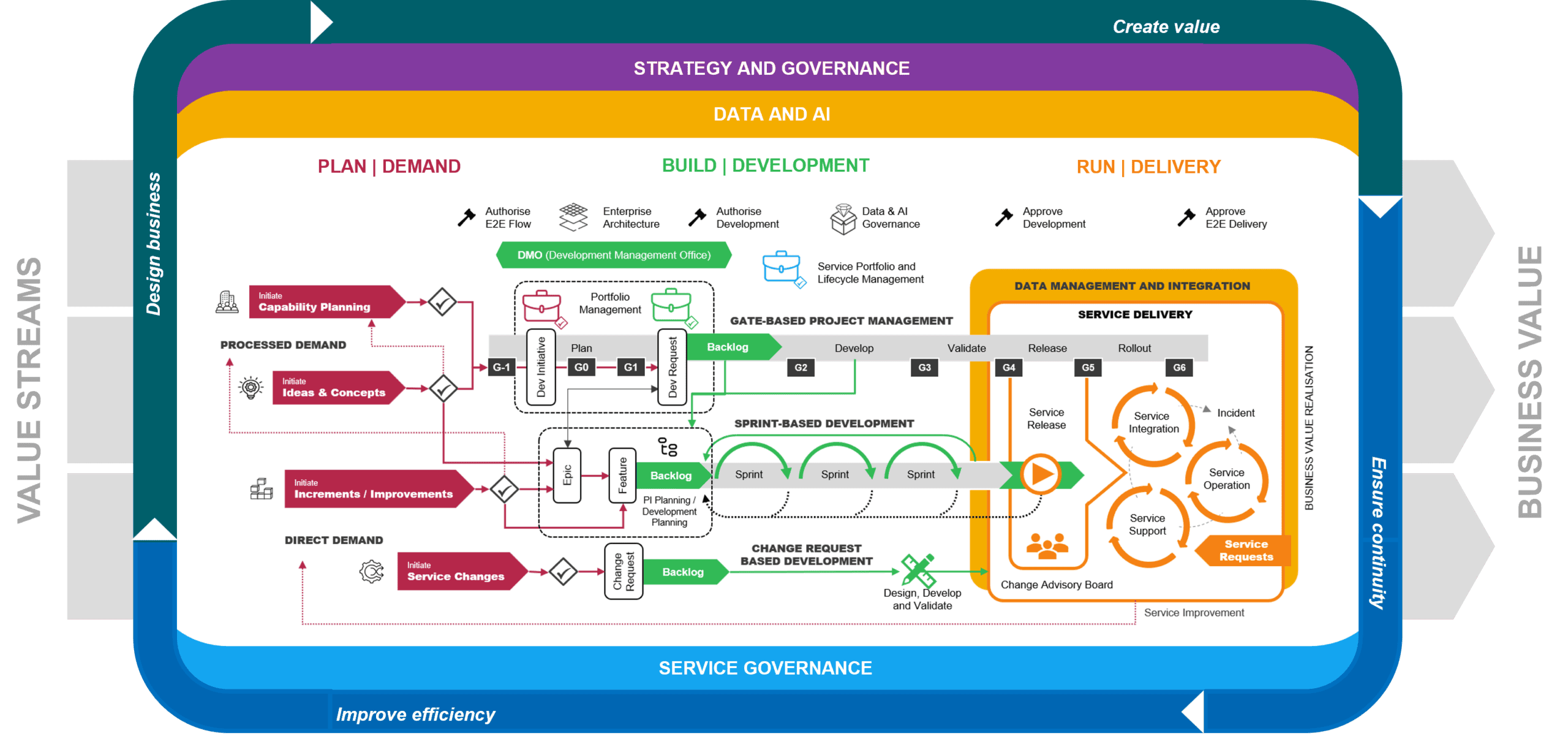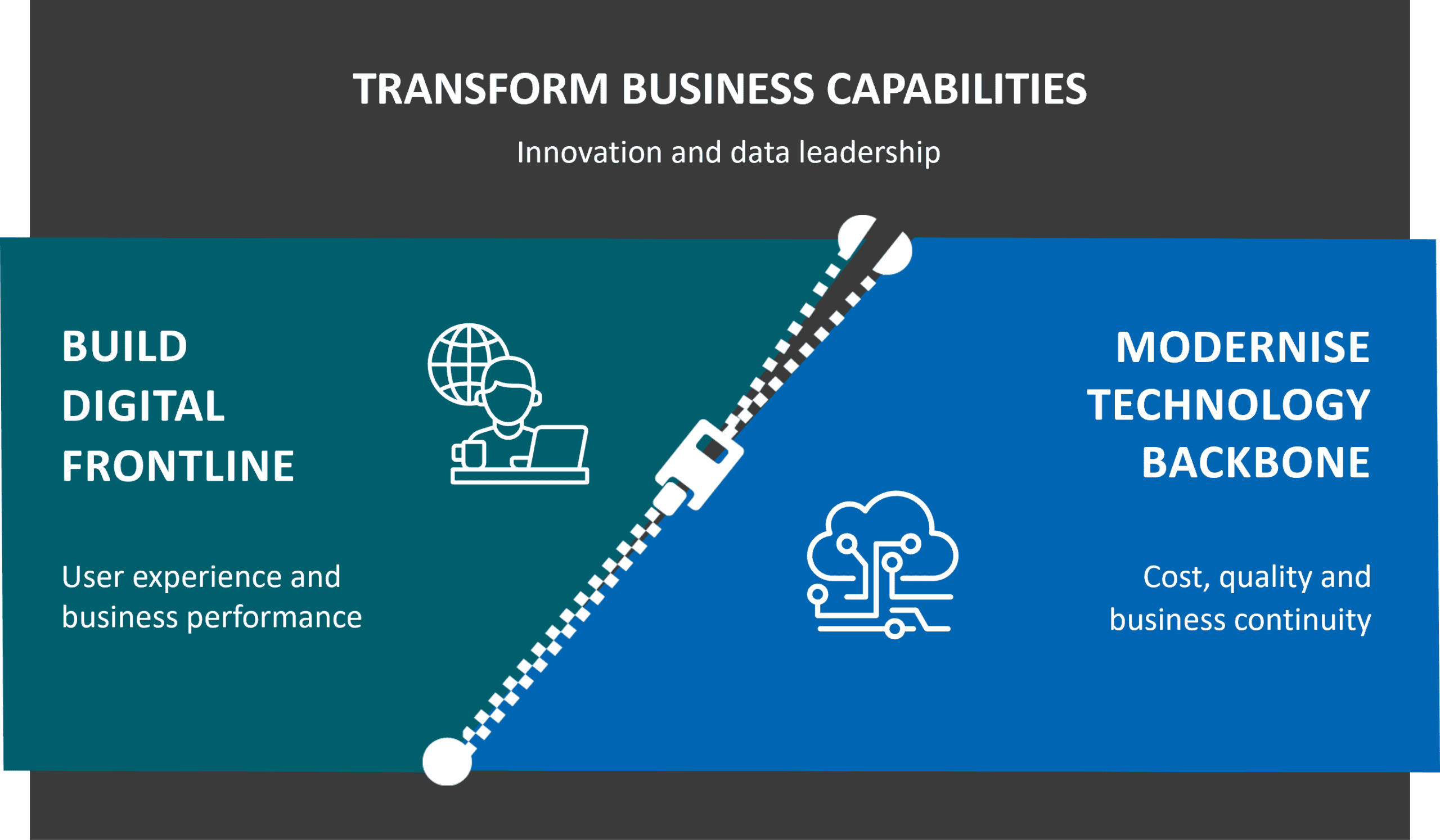
Modern service operations rely on a complex ecosystem of internal teams, external providers, platforms, cloud services, operational technologies, AI agents, and specialised partners. As services become increasingly interconnected across organisational and technological boundaries, maintaining operational consistency, visibility, and service quality becomes more demanding.
Service integration and quality assurance ensure that services operate as one coordinated operational ecosystem regardless of how many providers, operational teams, technologies, or support functions are involved. The objective is to maintain operational quality, business continuity, cost transparency, and reliable service delivery across the full operational environment.
Service integration coordinates services and service providers where this is needed. It helps ensure that service commitments, supplier arrangements, continuity requirements, costs and operational policies are applied consistently across the services involved.
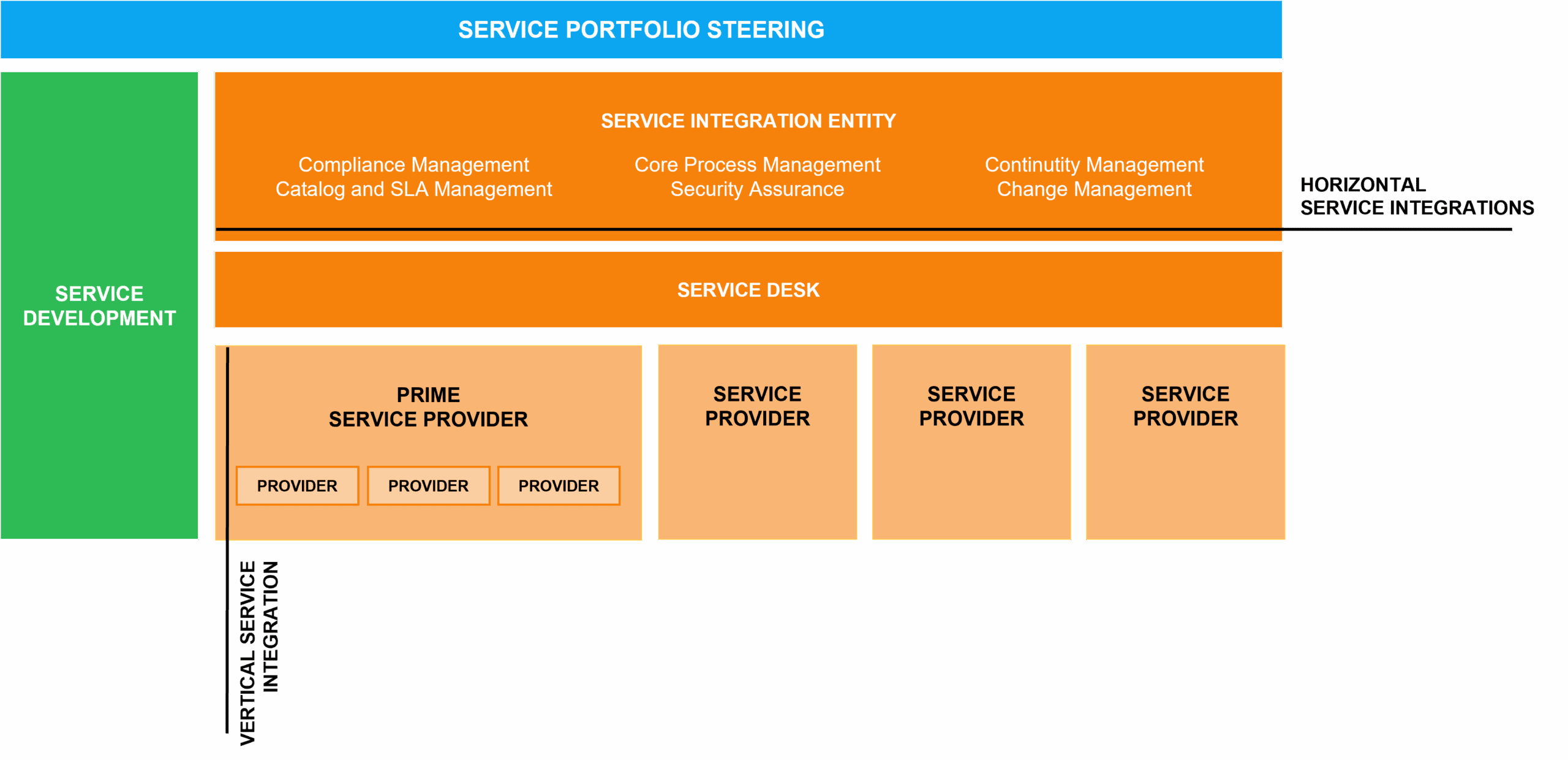
Service integration operates across multiple dimensions.
Horizontal service integration coordinates operational processes, monitoring, escalation, and service management practices across the full-service ecosystem. It provides end-to-end operational visibility and ensures that services function consistently across providers, technologies, and operational domains.
Vertical service integration focuses on operational coordination within a specific service, platform, provider, or operational domain. Each provider or operational team remains responsible for operational quality within its own scope while aligning with the common operational practices and integration requirements of the wider ecosystem.
Together, these dimensions create a unified operational model where services function as a connected operational capability rather than isolated operational silos.
Service integration and quality assurance focus on harmonising operational practices and maintaining operational reliability across the service ecosystem.
This includes:
As services become more interconnected, operational failures increasingly emerge across dependencies rather than within isolated systems. Service integration therefore focuses strongly on cross-service coordination, dependency visibility, and proactive operational management.
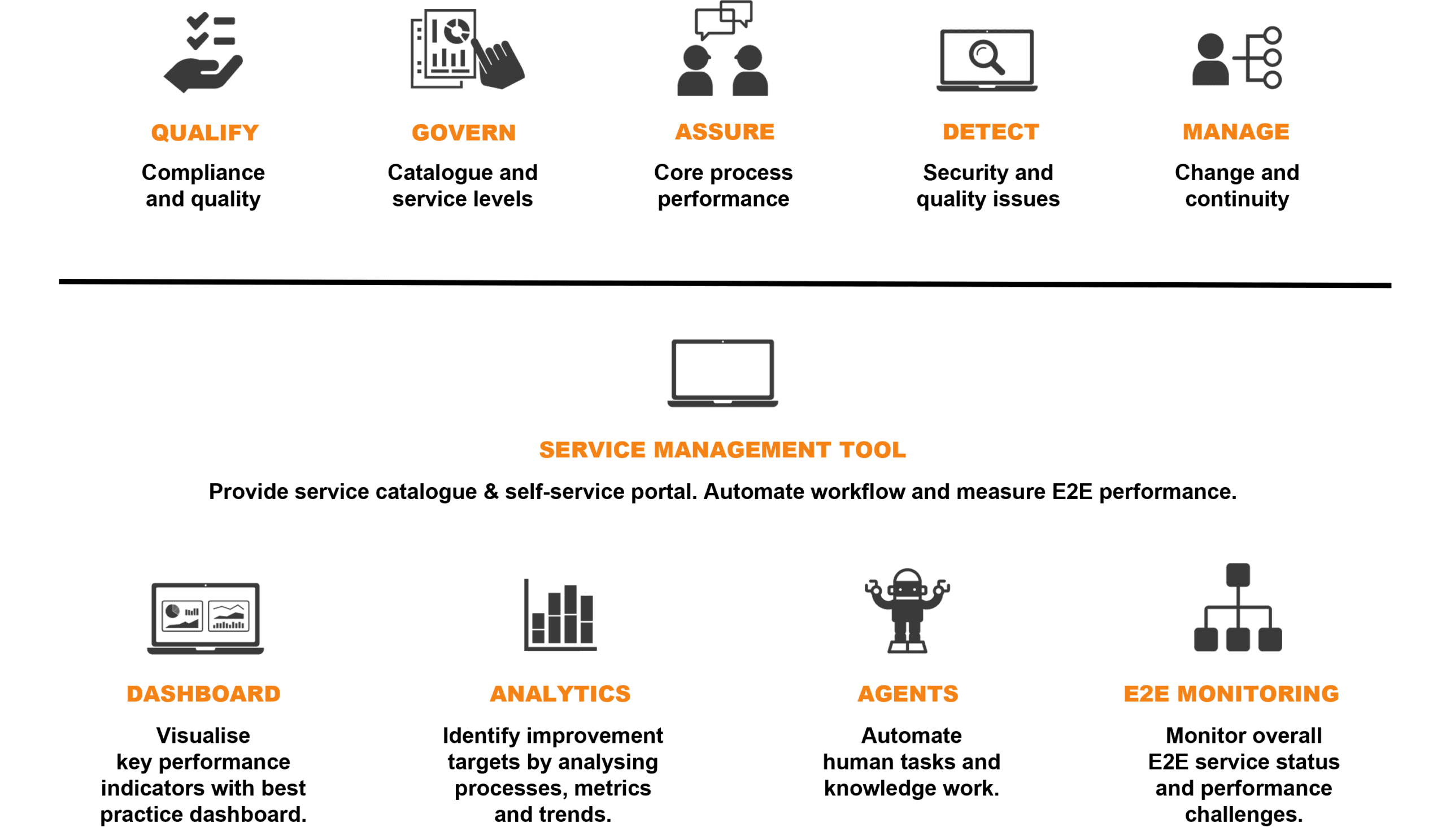
Consistent operational practices are essential in multi-provider and multi-technology environments. Service integration establishes common operational practices, escalation models, operational reporting, continuity coordination, and visibility mechanisms that enable services and providers to operate together effectively.
Operational visibility is a critical part of service integration capability. End-to-end monitoring, dashboards, analytics, dependency visibility, and reporting provide transparency into service quality, operational risks, continuity status, cost development, and ecosystem performance.
Operational analytics support continual improvement by identifying recurring issues, service dependencies, bottlenecks, cost drivers, and opportunities for optimisation.
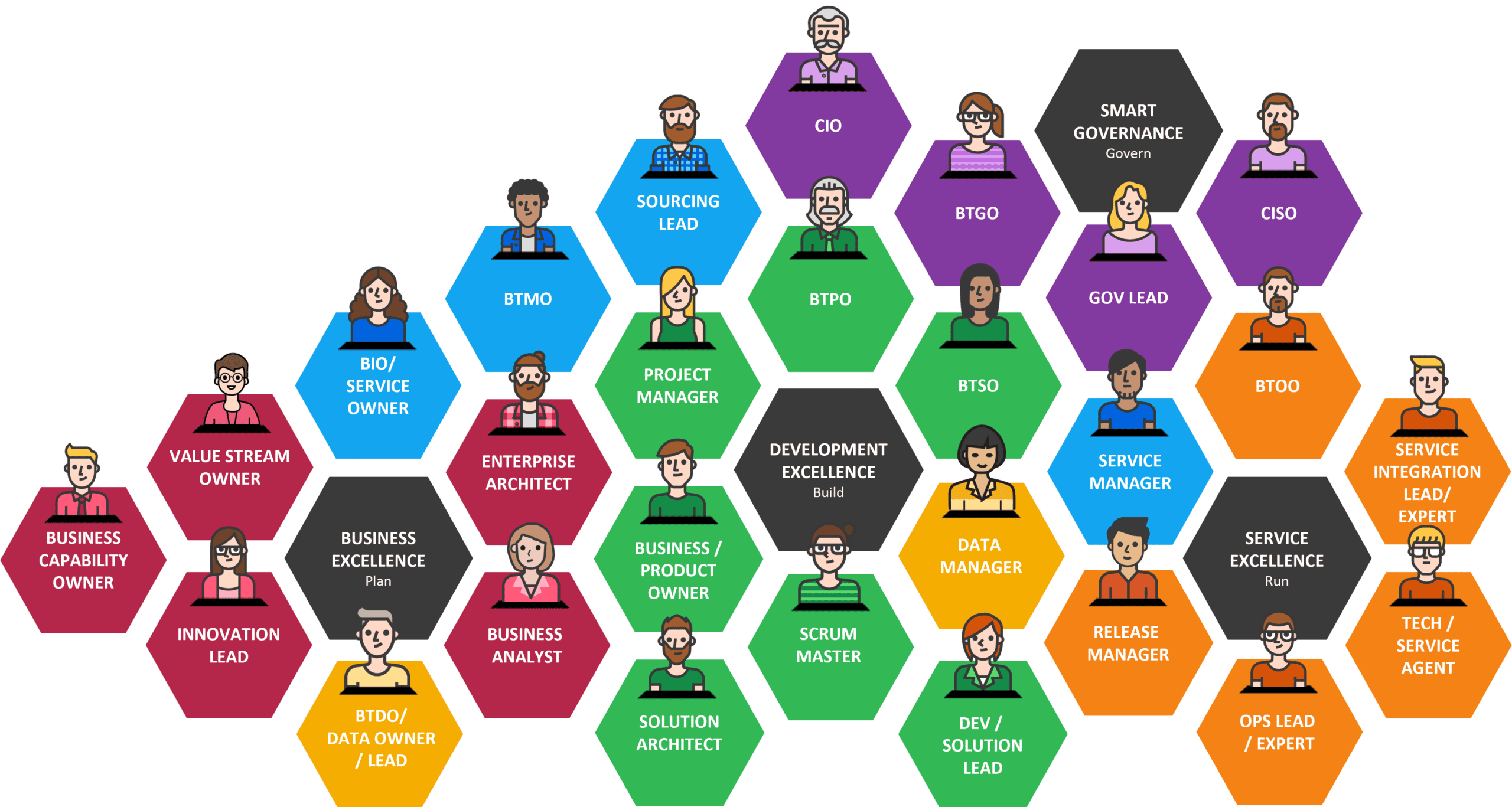
The Service Integration Lead coordinates operational practices, service quality, cross-service visibility, and collaboration across operational teams, providers, support functions, and governance entities. In larger organisations, these responsibilities are often coordinated through a Service Management Office (SMO) or equivalent operational coordination capability.
Artificial intelligence is significantly changing service integration and operational quality management.
AI agents are the new digital workforce and therefore part of the operational service ecosystem. They require operational ownership, monitoring, escalation paths, continuity arrangements, and quality assurance in the same way as other operational capabilities. Their actions, dependencies, data usage, decision paths, and service impacts must be visible and manageable within service integration practices.
Service integration therefore plays an important role in AI agent operations. It ensures that AI agents are connected to service catalogues, operational processes, support models, access controls, monitoring practices, incident management, change management, and continuity requirements. This is necessary to keep AI-enabled services reliable, traceable, and operationally controlled.
At the same time, service integration itself can become highly agentised. AI agents can support operational monitoring, event correlation, readiness checks, reporting, documentation, escalation support, and operational analytics. This changes the work of service integration from manual coordination towards supervised, analytics-driven, and increasingly automated operational orchestration.
As AI agents become both managed operational capabilities and contributors to service integration work, operational governance, transparency, and coordinated practices become increasingly important. Service integration ensures that human teams, providers, automation, and AI agents operate as one coherent service ecosystem.
Service integration creates the operational coherence required to deliver reliable services across a complex ecosystem. It ensures that service commitments, provider responsibilities, operational dependencies, cost expectations, and quality requirements are managed as one connected operational environment rather than as separate operational silos.