Support and service to users ensure that users can access, use, and benefit from services effectively in their daily work. The objective is to provide responsive, scalable, and increasingly intelligent support while enabling productive and reliable service usage across the organisation and ecosystem.
Support services operate as the user-facing operational interface between services and the people using them. Users may include employees, customers, partners, suppliers, or other stakeholders interacting with the organisation’s services and operational capabilities.
As services become more digital, integrated, and automated, support operations increasingly combine human expertise, self-service capabilities, workflow automation, operational analytics, and AI-assisted support into one coordinated support environment.
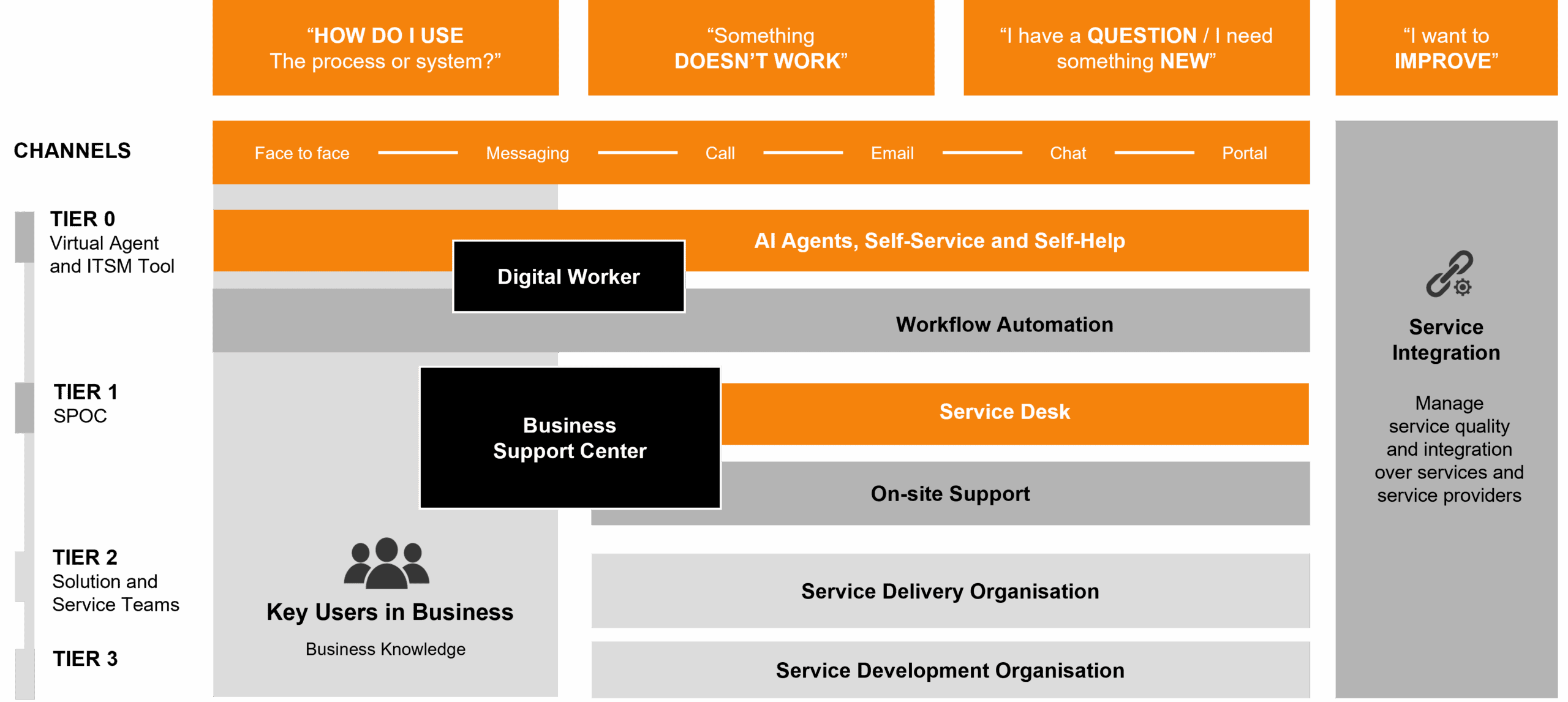
Support operations help users resolve issues, request services, access operational guidance, and use services effectively in daily work.
Support requests typically relate to:
Support operations are usually organised across multiple support levels combining self-service, support teams, operational specialists, providers, and development teams. Routine operational requests are resolved through automated fulfilment and standard operational workflows, while more complex situations require operational coordination, specialist expertise, or business judgement.
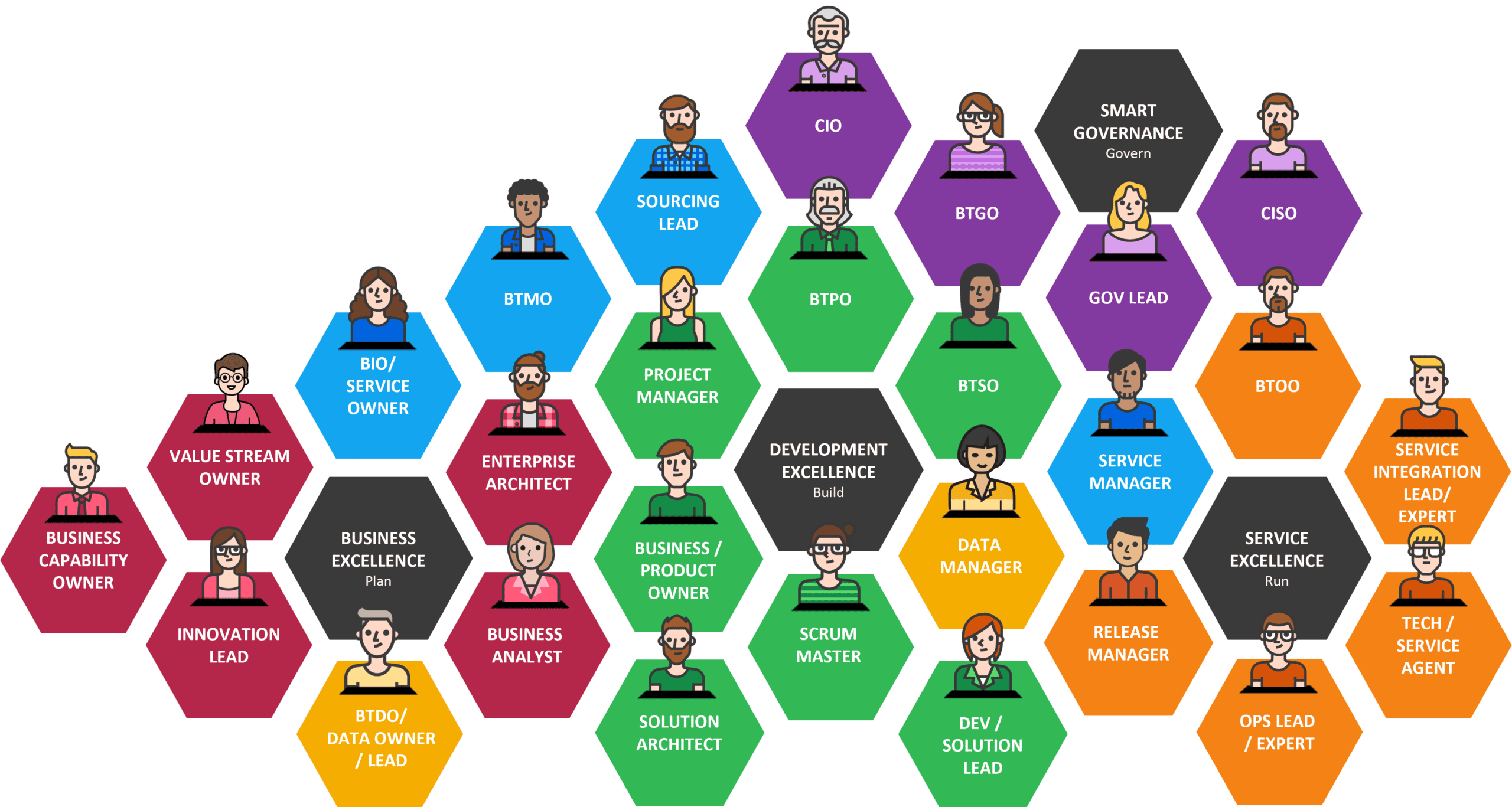
The Service Desk Lead coordinates user-facing support operations, support processes, escalation practices, and operational communication across support teams and operational providers.
The objective of support is not only to resolve tickets efficiently, but to minimise operational disruption and help users operate effectively within the service environment.
Support operations are increasingly highly automated. Users expect immediate access to services, guidance, fulfilment, and operational support without needing to understand internal organisational structures or operational processes.
Modern support environments combine:
Routine support activities such as password resets, service requests, access provisioning, operational guidance, and standard incident handling are increasingly automated through workflows, service catalogues, AI agents, and operational orchestration platforms.
AI-assisted support operations improve responsiveness, scalability, and operational consistency by supporting request routing, operational diagnostics, knowledge retrieval, fulfilment coordination, and operational communication.
Support operations therefore evolve towards hybrid support environments where human teams, automation platforms, providers, and AI agents work together as one coordinated operational capability.
Support operations are shifting from reactive issue handling towards proactive operational enablement and knowledge sharing.
Traditionally, support focused on “I need help” interactions where users reported incidents or requested assistance after problems had already occurred. Increasingly, support also focuses on “Do you know” interactions where users receive proactive guidance, recommendations, contextual support, and operational insights before issues emerge or opportunities are missed.
This includes:
Support operations therefore contribute directly to business value realisation, operational maturity, and continual improvement rather than functioning only as reactive support centres.
User interactions, support analytics, recurring issues, and operational feedback provide valuable insight into service usability, adoption barriers, operational bottlenecks, and improvement opportunities. These insights support service improvement, operational optimisation, knowledge development, and future development priorities across the organisation.
As support becomes increasingly automated and knowledge-driven, the role of human support teams shifts towards operational coordination, business guidance, exception handling, and user enablement while AI agents and automation handle a growing share of routine operational interactions.
Effective support and service to users create a more responsive, intelligent, and operationally integrated service environment where users can benefit from services efficiently and organisations can continuously improve operational quality, knowledge sharing, and business value creation.